Part 2 of 5 Parts
#3 – Mentally fit in space, foggy back on Earth
Mathias Basner of the University of Pennsylvania carried out a study that monitored the cognition of both twins for the duration of mission. Each twin was required to perform ten different cognitive tests multiples times. The researchers were able to track how spacefaring Scott’s mental faculties were influenced by microgravity. Using the preflight test results as a baseline, Basner discovered that Scott’s yearlong mission aboard the ISS did not significantly impair his cognitive abilities while inflight. However, after Scott returned to Earth a pronounced decrease in his speed and accuracy on cognitive tests were detected. The initial theory was that readjusting to Earth’s gravity may have caused Scott’s postflight cognitive decline, but further study is needed. The researchers also point out that the cause of Scott’s decline in performance after returning to Earth could have been due to a very hectic postflight schedule.
#4 – Flu vaccine stimulates the immune system, even in space
Emmanuel Mignot at Stanford University conducted a study that injected flu vaccine into Scott and Mark on two separate occasions. The twins were inoculated before the Scott’s mission and one year later after he had returned to Earth. On both occasions, after the vaccines were administered, the twins showed similar increased immune cell responses to the flu. When flu vaccines are administered, weakened or dead flu virus cells are injected into the bloodstream. This stimulates the body to produced antibodies that seek out and destroy viral cells. This prevents healthy flu cells from multiplying and overwhelming the body’s defenses. The similar immune responses of the twins suggested that space travel does not prevent the flu vaccine from producing the desired immune response.
#5 – Inflammation increases while in space
Mike Snyder of Stanford University conducted a study that investigated whether or not space affects inflammation in the human body. Snyder used blood tests to measure lipids and cytokines. He was able to compare how the inflammatory responses of the twins differed while Scott was at the ISS in orbit. The researchers found multiple lines of evidence suggesting that Scott’s body was more prone to inflammation in a microgravity environment that Mark’s was on Earth. The team discovered that Scott had altered levels of a lipid panel taken in space, indicating increased inflammation in his body. The researchers also found that a certain group of Scott’s cytokines were elevated before the flight and they remained elevated throughout the mission. In addition, another group of Scott’s cytokines remained elevated for six months. The study also showed that Scott’s body experience an increase in some proteins that are known to help regulate normal insulin activity. Since inflammation can cause insulin resistance, the increase in Scott’s proteins may have been a counter-measure carried out by his body to help combat the insulin resistance associated with inflammation.
Please read Part 3 next
-
Biological Effects Of Space Travel – Part 2 of 5 Parts
-
Biological Effects Of Space Travel – Part 1 of 5
Part 1 of 5 Parts
I have posted about the effects of space on human health before. This is obviously a critical question when considering the human exploration and exploitation of space. If humanity is going to become a space-faring species, we have to deal with health issues. It turns out that extended space missions affect many different systems in a human body. Microgravity seems to be a major cause of health issues. Radiation beyond the protection of the Earth’s atmosphere and radiation belts is also dangerous to astronauts. It also turns out that bacteria tends to mutate into more dangerous forms in space habitats but this has not been extensively studied yet.
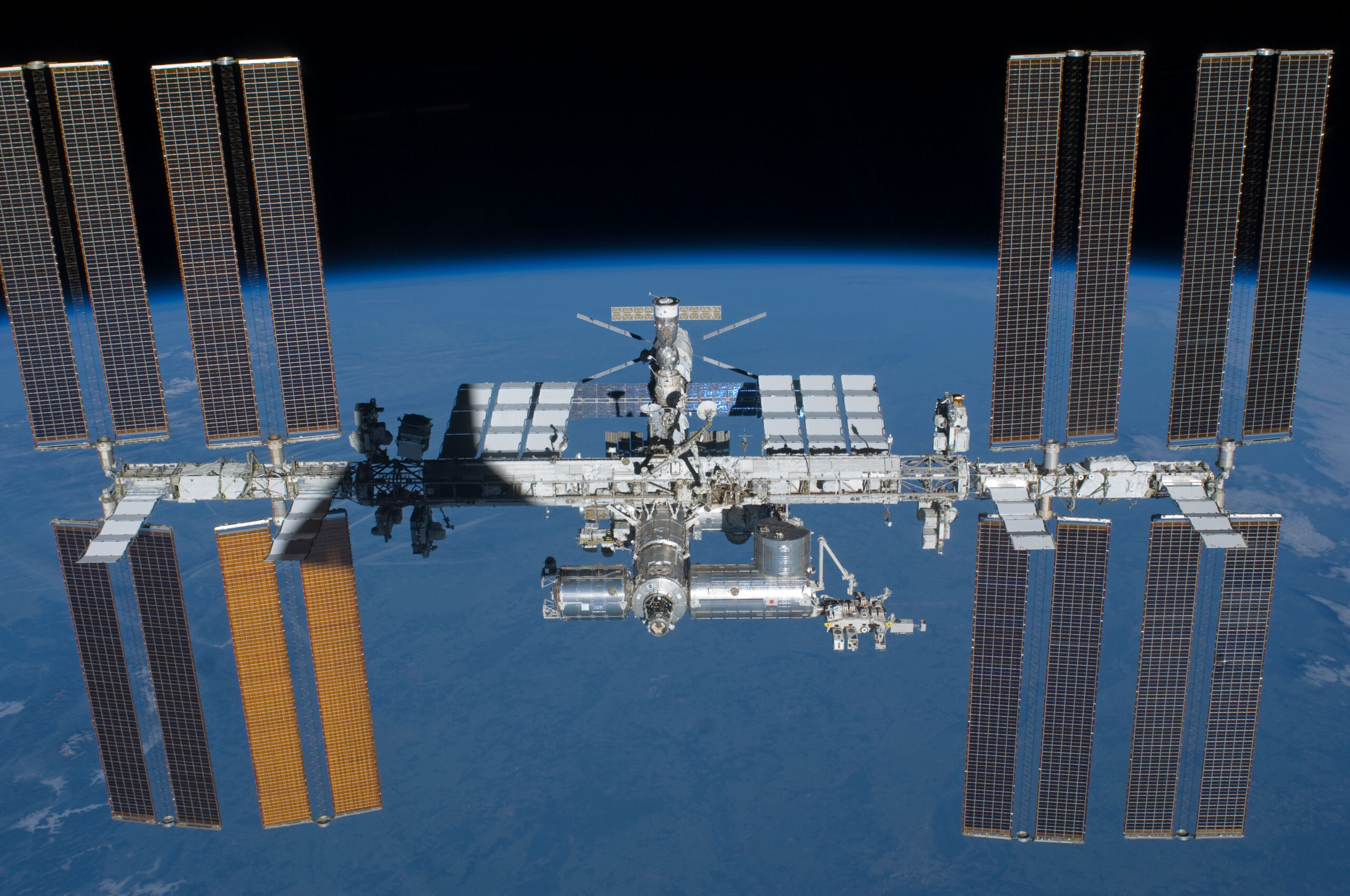
Mark and Scott Kelly are twins. Both were trained as astronauts. Mark retired in 2011 and Scott is still active in NASA space missions. In 2016, NASA decided to do a detailed comparison between the brothers when Scott was sent into space to spend a year at the International Space Station and Mark stayed home on Earth. Samples were taken from both of the twins before, during and after Scott’s ISS mission.
The NASA Twins Study analyzed how each of the twins’ biomarkers evolved during Scott’s one year ISS mission. The study was made up of ten distinct research projects. Each project focused on a different aspect of the human body. The findings of all the projects were integrated into a summary paper. Here is a summary of the most recent findings for each of the projects as of 2018.
#1 – Telomeres get longer during spaceflight
Telomeres are caps that shield the ends of our chromosomes. They protect DNA from damage and degradation. Susan Bailey of Colorado State University led a study in which researchers tracked the length of the twins’ telomeres before, during and after Scott’s yearlong spaceflight. They found that Scott’s telomeres increased significantly in length while he was in space. The telomeres of the Earthbound brother, Mark, stayed relatively stable during the same period. Previous research has indicated that longer telomeres are associated with fewer age-related problems. Although Scott’s telomeres lengthened while he was in space, upon his return to Earth, they underwent rapid shortening only forty-eight hours after he landed. Eventually, they returned to the same length they had been before the flight. The researchers believe that the temporary lengthening of Mark’s telomeres might have been a side effect of his rigorous exercise routine and restricted, low-calorie diet while in orbit.
#2 – Decreased body mass and increased folate in orbit
Scott M. Smith at the NASA Johnson Space Center monitored the biochemical profiles of each twin to identify any changes. In order to do this, his team tracked the twins’ height and weight and analyzed their blood and urine samples for the whole mission. The researchers discovered that Scott’s body mass dropped significantly during his time in orbit. In addition, they found that his levels of folate significantly increased. Folate is a beneficial form of folic acid often used to treat anemia. Much like Bailey’s findings with respect to telomere lengthening, Smith believes that the drop in Scott’s body mass and increase in folate could be a result of eating healthier and exercising more often while in orbit.
Please read Part 2 next -

Researchers Believe That It Is Time To Seriously Study Sexual Issues in Space
According to NASA, no human beings have ever had sex in space. On the other hand, other nations have launched men and women into space, so such a claim is suspect. In any case the increasing interest in private space tourism suggests that human beings will soon be engaging in sexual activity in space if they have not already.
A team of Canadian researchers from Concordia University and Laval University recently published a paper in the Journal of Sex Research in which they claim that there is an urgent need for scientific research into all aspects of sex in space.
The Canadian team is led by Simon Dubé who is a Concordia University PhD candidate in psychology specializing in human sexuality, sextech, and erobotics. They call for space programs to seriously explore “space sexology” which they define as the “the comprehensive scientific study of extraterrestrial intimacy and sexuality.”
Up to the present, space agencies such as NASA have ignored the topic of sex almost completely. They may have been concerned about generating a controversy that could affect their funding. When asked about sex, NASA officials have brushed the subject aside. Astronauts may be prohibited from having sex or developing intimate relationships onboard the International Space Station.
As humanity increasingly embraces the prospects of colonizing low-Earth orbit and beyond through private missions, disregarding research into a basic human drive such as sex is growing less acceptable. Dubé and his co-authors outlined in their report a variety of potential risks related to space sex that should be studied.
To start with, ionizing radiation could interfere with sexual reproduction by altering the DNA of sperm cells, egg cells and even human embryo. However, one recent study suggested that mammal embryos will be able to develop normally in space. Microgravity could make sex both messy and difficult. A space habitat is a place where cleanliness is critical. Space habitats are cramped, remote and not very private. All this makes sexual intimacy difficult. Thinking about the prospects for colonization, small settlements with limited intimate partners will probably breed stress, conflicts and even sexual harassment or assault. The farther people get from Earth and the longer they stay in space, the more probably that sexual relationship-related problems will appear.
The research team makes the case for researching solutions to these potential problems immediately. The report said, “As technology makes extraterrestrial life and travel more accessible to the public, the people who go into space in the future — from scientists to tourists — may not have to undergo the same kind of stringent training or selection process as current astronauts. Producing quality science and implementing systemic changes take time, so why not start immediately, rather than wait for problems to arise?”
Dubé and his co-authors have already laid out a few potential areas for research. The first task is designing systems and spaces that allow for eroticism to be safe, private and hygienic. This effort might also include preliminary planning for the delivery of babies in space and treating any sex-related health issues. The second task is to create training programs that prepare space travelers for intimacy, sexual activity, and any social problems that may arise. The third task is engineering sexual technologies such as toys or robots that permit clean and satisfying sexual experiences.
The researchers say that ultimately, if properly researched and planned for, “intimacy and sexuality — like leisure — could help endure and normalize life in space by making it more enjoyable and less lonely.” On Earth, sexual activity relieves stress, lowers blood pressure and helps with sleep among many other benefits.
Dubé and his colleagues add, “Facilitating intimacy and sexuality in space could improve the life of astronauts and future space inhabitants. Intimate and sexual activities can arguably help people adapt to space contexts and normalize space life.” -

New Robotic Arm For Manipulation In Space Is Being Developed
The report on the Harbin robotic arm was published in the September 28th issue of Space: Science and Technology. Wenfu Xu is a professor in the Harbin Institute of Technology’s School of Mechanical Engineering and Automation and State Key Laboratory of Robotics and Systems. He said, “In order to solve the problems of strict restrictions on the mass and size of the manipulator, as well as the high requirements for reliability and safety of the control method in space operation, we developed a light space manipulator and proposed a new control method.”
Such a robotic manipulator has to be able to exert constant force control when in operation. Xu went on to say that “For the constant force control of a plane, the direction of control force is constant, but for a curved surface in an unknown environment, its normal vector is often changed in real time, so the traditional method would fail. In order to overcome this difficulty, we propose integral adaptive admittance control that can realize real-time correction of the desired position of the end of the manipulator so that it is in full contact and realizes constant force control.”
Consider drawing a line on a piece of paper. If the paper is on a flat desktop, it is much easier to maintain even pressure across the whole line. Drawing an identical line on a sheet of paper that has been wrapped around a bouncing ball is much more difficult. It will require specific calculations to understand the movement of the ball and how much pressure to exert based on the position of both the pen and the ball.
In order to keep the force control of the space manipulator constant, the research team imposed a control method that removes the need for steady-state correction. This is a key component of control systems in well-known environments. Steady state correction applies the potential error to the full movement. This eases problems when the environment is entirely predictable. If the manipulator knows that the desk’s surface is rough and strong pressure would result in the paper being ripped, the manipulator can lighten the pressure of the pen to maintain a constant line. However, when the surface is changing and unpredictable, maintaining a constant corrective state results in more errors because not all corrections apply to all errors.
The Harbin researchers tested their control method for the lightweight manipulator and found that the mechanical arm could adjust quicker than a traditionally controlled manipulator even on an unknown surface. This results in a tracking effect that is steady enough for practical applications. Xu said, “Using the proposed light space manipulator and the integral adaptive admittance control method can solve practical problems on on-orbit servicing, such as space target capturing, on-orbital assemble, orbital repairing and so on.” According to Xu, this work can serve as a reference for the design of light manipulators in the future. The control approach developed by the Harbin team can be applied to the machining process of robotic grinders and polishers. -

Moderate Brain Damage Found After Five Months In Earth Orbit – Part 2 of 2 Parts
Part 2 of 2 Parts
The researchers also checked the level of tau proteins in the blood samples. It can accumulate in tangles in neurodegenerative diseases such as Alzheimer. The team also measured neurofilaments light chain which is a protein that can increase when parts of the neurons in the brain called axons are injured. A fourth protein that was studied was glial fibrillary acidic protein which is involved in the development of astrocytes. Astrocytes are star-shaped cells in the brain that clear waste out of the cerebrospinal fluid and protect the brain from harmful substances. When GFAP increases, this usually means that the cell is working harder to clear out waste.
The researchers discovered that NfL, GFAP and one of the types of amyloid protein were also significantly higher after the Russian cosmonauts returned from the ISS than they were before they had been launched into orbit. The levels of these selected proteins increased one day and one week after the end of their orbital mission, but the levels started to decrease by three weeks after their return to Earth. They did not return preflight levels.
On the other hand, the study revealed that the total level of tau protein first increased slightly and then decreased below the initial level before the space mission. Zetterberg concluded that this might be because tau protein is typically cleared more rapidly from cells than the other biomarkers. Or it could be related to the test that is currently used to measure levels of tau. He said that the current test is not as good as it is for the other biomarkers.
This research did not determine exactly what caused the increase in these proteins, but the researchers believe that it could be related to the effect of microgravity on the waste elimination system in the brains of the cosmonauts.
Zetterberg said, “It looks like this system might have been dysfunctional. When you get back on Earth, then it starts to work again, and then all these proteins come out in the bloodstream and are degraded.”
This could involve the abnormal impacts that microgravity has on the fluid of the brain. Previous research mentioned above examined the brains and eyes of astronauts and cosmonauts and found such effects. The researchers also think that some of their research results could reflect a brain injury that was caused by microgravity.
The study examined cosmonauts who had been in orbit for a long period of time. Zetterberg said that it is probable that a shorter duration space mission would also have negative impacts on the brain. This research will be of particular importance as humans begin to spend more time in space. A landing on Mars would require people to spend as much as two years in space. NASA intends to launch a manned space mission to Mars in the early 2030s. Zetterberg said in an email, “That’s a very long time.” Most of us, he wrote, “need to make sure we can stay on Earth.” -

Moderate Brain Damage Found After Five Months In Earth Orbit – Part 1 of 2 Parts
Part 1 of 2 Parts
I have written before about the negative effects on the human body that result from living in space. Researchers have been exploring how spaceflight can have a serious impact on human physiology and human health. The groundbreaking Twins study found a number of ways that space travel changes human bodies. It can even have an impact on gene expression. It has been shown that the heart, eyes, and bones can be damaged. Much less attention has been paid to the effect of space travel on the human brain.
Since the days of the U.S. space shuttle missions, astronauts have reported problems with vision after time is spent in orbit. Medical evaluations of returning astronauts have reveals that astronauts’ optic nerves swell and some subjects have experienced retinal hemorrhage and other structural changes to the eyes. Scientists suspect that these vision issues are caused by increased “intercranial pressure” or pressure in the head during time in orbit.
This research team used magnetic resonance imaging on eleven astronauts before and after they traveled in space for up to year after their return. These MRI images indicated that during long exposure to microgravity the brain swells and cerebrospinal fluid which surrounds the brain and spinal chord increases in volume.
Recently, researchers tracked the physical well-being of five Russian cosmonauts that spent about five months on the International Space Station. Elevated levels of particular proteins in the blood of the cosmonauts that serve as a marker for damage to their brains were found.
This research was documented in the October 11th edition of the journal JAMA Neurology. The number of occupants was small for a medical study and the amount of damage caused to their brains was not a major threat to their health. However, this study was sufficient to raise warning flags and it will likely be repeated with larger groups as people begin to spend longer times in space.
Henrik Zetterberg, is a neurochemist at the University of Gothenburg in Sweden and one of the authors of the brain damage research article. He said, “It’s not like major traumatic brain injury or anything like that. But still, all of the cosmonauts have this pattern of biomarker change.” He compared the damage to that suffered as a result of a concussion.
The researchers took blood samples from five Russian male cosmonaut twenty days before they were launched to rendezvous with the ISS in order to establish a baseline for targeted blood proteins. Then they collected additional blood samples one day, one week and three weeks after the cosmonauts returned from orbit. The team analyzed the blood samples for the quantities of five different biomarkers association with brain damage on Earth. Among the monitored proteins were two types of amyloid-beta proteins which build up and form clumps in the brains of people with Alzheimer disease. Zetterberg said, “It’s a sticky protein. It is important to get rid of it from the brain tissue. In young and healthy people, it is rapidly cleared from the brain.”
Please read Part 2 next -
Creating U.S. Space Infrastructure – Part 2 of 2 parts
Part 2 of 2 Parts
The U.S. economy on Earth is supported by a huge and complex investment in infrastructure for transportation and logistics. The Interstate Highway System, railroad networks, long-haul trucking, maritime and air cargo allow our economy to function. Systems of logistics are flexible, affordable and available. Very little of our infrastructure is waste. Ships, trucks, planes, trains and cargo containers are reused over and over again. Every company in every industry relies on some part of this logistical capacity.
Logistic systems also server to stimulate the U.S. economy. The construction of the Dwight D. Eisenhower System of Interstate and Defense Highways resulted in the creation of the long-haul trucking industry. Shipping containers have been standardized in size and shape. This has been a major factor in the globalization of the world economy, new industries have sprung up because of the convenience, scalability and flexibility of logistics.
Should the U.S. invest in a logistic infrastructure in space? Should our government provide transportation, depots, energy and communication that server the many space businesses and government space programs. The answer of many experts is a resounding ‘yes’. It is time to being the construction of the Space Superhighway.
There are existing technologies which can be used to build a space-based logistic infrastructure like the interstate system and containerized shipping industry. Systems that allow satellite inspection, repair and modernization in space are already in development. Some companies are working on the design of future satellites to be able to refueled. There is also work on upgrading the electronics on satellites while in orbit. Constructing the Space Superhighway will move us from ‘disposable’ to ‘reusable’ systems in space. Every single space project from factories in orbits to habitats on the Moon will benefit from this program.
Creating widespread space systems with affordable and timely logistical supply will stimulate economic growth, jobs and new businesses. Many experts agree that the best model for this development is private funding and operation. The U.S. government could make seed funding available as it has done for other space programs. Technological support, policy are regulatory interventions, and service contracts will help the new system get on its feet. That will help attract private capital that is needed to construct the new system. Other government actions could also serve to stimulate the development of a space logistics infrastructure. A focused research and development tax credit would be valuable as well as the creation of space technology opportunity zone. However, the private sector can bring efficiency, agility, and capital that will be critical for long-term success.
Space is a growing part of the U.S. economy and has had positive impacts on society far beyond markets and revenues. The Space Superhighway can be a whole-of-nation project. It would be a worthy legacy for the current U.S. national administration and Congress. It will span many new space ventures which are now blossoming, generating social and economic benefits for generations to come. It would provide America with an advantage in the face of the strategic competition in space. -
Creating U.S. Space Infrastructure – Part 1 of 2 parts
Part 1 of 2 Parts
When I was kid, the human race launched a few satellites. Now U.S. space systems are a critical part of infrastructure for our whole society. For the most part, satellites are invisible, especially in cities because of light pollution. However, our economy and safety are supported by them. Every cell phone in use receives precise timing signals and location signals from GPS satellites. ATM withdrawals and stock transactions also receive timing signals. Weather satellites have saved many lives by tracking hurricanes and locating emergency signals. Communication satellites provide streaming video as well as internet connection for ships and emergency operations during natural disasters. Most of the research on climate change is based on data from satellites. Earth imaging satellites are a boom industry, allowing the construction, mining and agricultural industries to be more efficient. The military relies heavily on satellites to manage its worldwide operations and detect threats to our security.
Because of the existing and growing space systems are so important to our society, Representatives Ted Lieu and Ken Calvert introduced the Space Infrastructure Act in June. The purpose of the act is to officially recognize space as critical U.S. infrastructure.
We are in a era of exploding growth in space exploration and exploitation. Most people are unaware of just how big space industry has grown. Currently, private companies are being created to harvest the resources of the Moon. Other space companies are planning to manufacture in space. These companies hope to produce artificial organs, pharmaceuticals and fiber optics. Several companies are working to make cheap internet connection to every person on Earth. Space hotels are being designed and constructed.
China is investing heavily in its own space program. They have landed a rover on the far side of the Moon and brought back samples from the surface. China believes and has stated that the Moon has great economic importance. They see space of through the lens of great power competition. They have developed antisatellite weapons which are a serious threat to the national security of the U.S.
Many analysts believe that we need to fundamentally change our approach to space today because of its importance to the future. Currently satellites are, for the most part, considered as disposable. We launch and use them but never inspect, repair, refuel, maintain or upgrade them. What are the future prospects for refueling satellites with dwindling fuel reserves? What are the possibilities for adding new electronics and mechanical systems to keep satellites up to date? Rockets have been considered as disposable as well. Some companies are reusing launch vehicles but most launch components are discarded in space and adding to the junk orbiting our planet.
The very first missions to extend the life of satellites are just being put into operations. They will need supplies on a regular basis in order to be practical. We want to make the stay of astronauts on the Moon more useful and long-lasting. Even if there are resources on the Moon that we can tap, lunar astronauts will definitely need food and other supplies from Earth. Space hotels will need a steady flow of supplies to support their guests and crew.
Please read Part 2 next -

Russia Sent A Film Crew To The International Space Station To Shoot A Commercial Movie
A Russian actress and a Russian director arrived at the International Space Station on Tuesday. They are starting a twelve-day mission to make the first commercial movie in orbit. The Russia crew is set to beat a Hollywood project announced last year by Tom Cruise, NASA and SpaceX. Actress Ylia Peresild, 37, and film director Shipenko, 38, took off from the Baikonur Cosmodrome. It is located in ex-Soviet Kazakhstan and rented by Russia for space launches.
The pair docked at the ISS at 1222 GMT after Anton Shkaplerov, the captain of their spacecraft, switched to manual control. When the hatches opened, the Russian trio emerged into the ISS where they were greeted by two Russians, a Frenchman, a Japanese and three NASA astronauts. The film crew was welcomed by Russian cosmonaut Oleg Novitsky.
The crew travelled to the ISS in a Soyuz MS-19 spacecraft to shoot scenes for “The Challenge”. The plot of the movie centers around a female surgeon who is dispatched to the ISS to save a cosmonaut. Shkaplerov and the two other Russian Cosmonauts have cameos in the film.
Konstantin Ernst is the head of the Kremlin-friendly Channel One TV network and a co-producer of the film. He spoke with the film crew as soon as they docked. He said, “They are in good spirits and feel well.”
Peresild was selected out of three thousand applicants for the role. At a pre-flight press conference, she said, “It was difficult psychologically, physically and emotionally… but I think when we reach our goal all the challenges won’t seem so bad.”
Shipenko and Peresild are expecting to return to Earth around October 17th in a capsule with Novitsky who has been on the ISS for the past six months. Ernst said that a film crew will document their landing which will also be featured in the movie. If the mission is successful, it will add to a long list of first for the Russian Space industry.
The Soviet Union launched the first satellite, the first animal, the first man and the first woman into Earth orbit. Kremlin spokesperson Dmitry Peskov told reporters that “Space is where we became pioneers, where despite everything we maintain a fairly confident position.”
The Russian space agency is still relying on Soviet-designed technology and has faced a number of setbacks, including corruption scandals and botched launches. Russia is also falling behind in the global race to explore and exploit space. It is facing stiff competition from the U.S. and China.
Roscosmos, the Russian space agency was dealt a blow after SpaceX last year successfully delivered astronauts to the ISS. This cost Russia its monopoly for journeys to the orbital station. For political analyst Konstntin Kalachev, the film being shot on the ISS is PR and a way to distract Russians from the “problems” that Roscosmos is facing. Kalachev said, “This is supposed to inspire Russians, show how cool we are, but I think Russians have completely lost interest in the space industry.”
In a bid to improve its image and diversify its revenue, Russia’s space program reveals this year that it will be reviving its tourism program to carry fee-paying adventurers to the ISS. Following a ten-year hiatus, Russia will launch two Japanese tourists to the ISS in December.
This year has been a milestone for amateur space travel. Last month, SpaceX completed the first all-civilian mission to space that took four untrained astronauts on a three-day loop around the Earth’s orbit. The trip followed Richard Branson’s few minutes of weightlessness in July. Amazon’s founder, Jeff Bezos, completed a similar mission a few days later. Later this month, ninety-year-old actor William Shatner, known for his portrayal of Captain Kirk in the Star Trek TV series, will fly into space on a mission with Bezos’s Blue Origin. -
New NASA Study Reveals That Long Missions In Space Can Affect Blood Flow In Astronauts
I have been interested in space exploration since I was a child. I have also read a lot of science fiction. The possible deleterious effects of prolonged time orbiting the Earth has seldom been raised either in academia or in fiction. But a lot of documentation has accumulated with respect to astronauts’ heath that suggests that greater attention should be paid to the changes wrought by space travel on the human body.
New research has found serious health problems in the bodies of astronauts aboard the International Space Station. The implications for long term health are still being studied but it appears that there are problems with bones, hearts, eyes and now blood flow.
A new study from NASA has identified a new danger in space. Low gravity can make blood flow stop and actually go in reverse in some astronauts. The condition is particular severe in astronauts’ upper bodies. This was the conclusion of a study that examined data from eleven astronauts who spent an average of six months each on the ISS. There were nine men and two women in the study.
Ultrasound scans revealed that about the fiftieth day of the mission, seven members of the crew had blood in their internal jugular vein stop flowing or even start going in reverse. The internal jugular vein is a major blood vessel which goes down the side of the neck. The purpose of this blood vessel is to collect blood from the brain, face and neck.
One of the astronauts also developed a clot in the vein while still in orbit. Another was found to have a partial clot upon coming back to Earth. Having your blood flow in reverse constitutes a serous problem. The discovery raises additional concerns about the dangers of long-term space travel.
Michael Stenger is a manager of the Cardiovascular and Vision Laboratory at NASA’s Johnson Space Center in Houston and a coauthor of the report on the study. He called the findings “unexpected”. He said, “We did not expect to see stasis and reverse flow. That is very abnormal. On Earth, you would immediately suspect a massive blockage or a tumor or something like that.”
Stenger attributes the blood flow issue to the absence of gravity. He points to years of observations on physiological changes in astronauts. He said, “This is why some astronauts get puffy faces, because there’s no gravity to pull down those fluids circulating in the upper body. You’ll sometimes also see veins popping out in the neck, or in the head — which you can see with bald astronauts, in particular.” He said that stopped blood flow was probably the most worrisome aspect of the new discovery because it can result in dangerous blood clots.
While the research is troubling, it can be seen as an opportunity to anticipate the risks and develop new treatments and preventative measures. The study is titled “Assessment of Jugular Venous Blood Flow Stasis and Thrombosis During Spaceflight”. It was published in the medical journal Jama Network Open (from the American Medical association.