Part 2 of 2 Parts
Craddock said, “It just seems like a good piece of the business we want to chase after, but in no way is going to stop us from going SSTO [single-stage-to-orbit] or creating a small satellite launcher.”
Jeremiah Pate is the CEO of Lunasonde. He said that his company is not a paying customer on RocketStar’s inaugural launch. It is developing plans for a constellation of satellites that will map resources under the Earth’s surface
Pate said the payload on the Cowbell launch vehicle has all the flight hardware of an operational satellite, “with the only major difference being that the power is supplied by the rocket instead of the solar panel” on the spacecraft.
He added, “The technology on this flight works similar to a conventional radar but works at a frequency over 1000 times lower by using our novel metamaterial antenna. This frequency band is what allows us to see deep underground at high resolution.”
Lunasonde has lined up Rocket Lab to launch an operational satellite to low Earth orbit next year. According to Pate it will be capable of seeing up to 2 kilometers below land surfaces and 500 meters below water.
Pate said, “The latter satellite will be both a technology demonstration as well as providing underground data to a small number of pilot project customers. This satellite will also be the first satellite in a constellation of subsurface imaging spacecraft, eventually capable of mapping the entire planet down to 10 kilometers on a biweekly basis, providing data to industries such as water resources, mining, and geothermal. Ultimately, this allows us to tap into a completely new dataset that has previously eluded the revolution that earth observation spacecraft have achieved.”
TriSept is a launch integration and mission management specialist that counts U.S. civil, military and intelligence agencies among its customers. It plans to use Cowbell’s suborbital flight to trial software designed to protect satellites against growing cyber threats.
TriSept’s newly developed Secure Embedded Linux software can protect large and small satellites from known and emerging vulnerabilities. It will serve as the operating system for Lunasonde’s prototype satellite, aiming to test its performance under flight conditions.
TSEL hopes to get full flight heritage next year when it serves as the operating system for the Lunasonde satellite heading to lower Earth orbit with Rocket Lab. The TSEL software is currently in advanced lab tests and functional trials at Old Dominion University in Norfolk, Virginia.
Rob Spicer is the TriSept CEO. He explained that TSEL currently needs to be added to satellites before they launch. However, he said that that its next generation could be uploaded to in-orbit, software-defined satellites to bolster security.
The key to TSEL’s automated mechanisms for improving cybersecurity defenses are its “zero trust” verification layers. The company said that these give operators an accurate picture of what is happening on the satellite at all times.
The vast majority of the thousands of small satellites crowding lower Earth orbit for communications, Earth imagery and other applications are ill-prepared for increasingly sophisticated security threats, according to Spicer.
-

Propulsion – RocketStar Working On Aerospike Engines – Part 2 of 2 Parts
-
Propulsion – RocketStar Working On Aerospike Engines – Part 1 of 2 Parts
Part 1 of 2 Parts
The aerospike engine is a type of rocket engine that maintains its aerodynamic efficiency across a wide range of altitudes. It belongs to the class of altitude compensating nozzle engines. Aerospike engines were proposed for many single-stage-to-orbit designs. They were a contender for the Space Shuttle main engine. However, as of 2023 no such engine was in commercial production, although some large-scale aerospikes were in testing phases.
RocketStar is a New York-based company that plans to launch its aerospike-powered rocket for the first time this fall. It will be carrying a prototype satellite for resource-mapping startup Lunasonde on a brief suborbital trip.
RocketStar intends for its forty-foot rocket called Cowbell to reach about seventy thousand feet on its test flight. This will depend on final safety requirements from NASA for launching from Launch Complex 48 which is a multi-use launchpad in Cape Canaveral, Florida.
RocketStar estimates this mission will only last eight minutes. Lunasonde expects that will be enough time for its onboard subsurface radar imager to collect important reflectance data to support its development.
RocketStar had planned to launch Cowbell on its first suborbital launch in early 2019. They wanted to test what the company has described as a proprietary aerospike engine. They received regulatory approval to launch Cowbell from a floating barge off the coast of Florida. RocketStar canceled the mission three days before liftoff citing safety concerns.
Since then, RocketStar has made few public statements about its plans as it pivoted to what it considers a safer launch from a pad on dry land.
Christopher Craddock is the founder of RocketStar. He said, “Between COVID and finding the right pad, it’s taken that long to adapt the sea-launch idea to a land-based launch.” Craddock said RocketStar decided not to broadcast its development progress until after it launched.
Craddock added, “We felt it’d be better to just do it, and then say, ‘OK guys we did our first one, this is what happened, we’d love to see you at the next one.’”
Craddock is a former Wall Street broker. He founded RocketStar to develop a single-stage-to-orbit launch vehicle powered by a 3D-printed aerospike engine.
Craddock said, “The current plan is to use a toroidal [aerospike] engine for orbital insertion with our development campaign, and then still using toroidal when we go commercial.”
Aerospike engines are a novel design first tested in the 1960s. They were at the heart of NASA’s experimental X-33 suborbital spaceplane program and its envisioned SSTO follow-on VentureStar. However, NASA and Lockheed Martin cancelled the X-33 and VentureStar projects in the early 2000s without finishing or flying either vehicle.
Cradock added, “No aerospike has flown under its own power, pretty much ever, and if it has it’s only been to like 50,000 feet [about 15,000 meters]”.
RocketStar’s first suborbital launch will take place from land. Craddock said lifting off from sea remains attractive from a “launch cadence perspective.”
RocketStar also intends to later provide propulsion solutions to other companies.
Please read Part 2 next -

Biology – UCLA Develops Compound To Prevent Mineral Loss From Bones in Space
One of the major health risks for astronauts may have a cure on the way. A specially-formulated medical compound has been shown to prevent bone loss in mice, and perhaps humans, aboard the International Space Station.
A team from the University of California Los Angeles and the Forsyth Institute in Cambridge, Massachusetts, is researching solutions to the problem. Microgravity causes a one percent drop in bone mineral density per month in the ISS. To ameliorate that loss, they turned to 30-year-old discovery and earlier research to develop a new drug that they claim not only prevented bone loss in the ISS’ rodent residents, but even increased bone density.
Dr. Chia Soo is a UCLA professor of plastic and reconstructive surgery. She recently said, “Our findings hold tremendous promise for the future of space exploration, particularly for missions involving extended stays in microgravity.”
The drug they developed in the experiment was a modified version of NELL-1 which is a protein that is used to regulate bone growth. NELL-1 was discovered by UCLA chair of orthodontics Dr Kang Ting in 1996. He found it was associated with a birth defect involving overactive bone growth. A 2015 study by Ting and other researchers, including Dr. Soo, found that NELL-1 was effective in stimulating bone growth both in stem cells in lab environments and animals.
For this latest study, a specific version of NELL-1 was necessary to simplify the treatment process. The researchers developed a form of NELL-1 that was bound to bisphosphate called BP-NELL-PEG that “specifically targets bone tissues without the common deleterious effects of [biphosphate],” and it appears to have been a resounding success.
Mice who spent nine weeks aboard the ISS and were given BP-NELL-PEG “showed a significantly increased BMD in all bones compared to control,” the team said in their paper. Both the mice on the ground and on the ISS who were treated with the experimental medication showed increased BMD, as one may expect from prior NELL-1 experiments.
The researchers said that “We conclude that BP-NELL-PEG successfully reverses osteoporitic bone loss and is a viable pharmacologic countermeasure for use in spaceflight”.
Soo told UCLA that the next step in the study was the analysis of live animal data, and how it relates to humans since mice are not prime targets for interplanetary travel.
Soo added that “We hope this will provide some insight on how to help future astronauts recover from longer duration space missions. That doesn’t answer the most pressing question about this discovery, though: When can we expect human trials of what could be a life-changing treatment for astronauts, much less those suffering from bone density diseases?”
Burlington, Massachusetts-based Bone Biologics is the only company that appears to have reached the point of doing human clinical trials using NELL-1 to treat degenerative disk disease in a pilot program in Australia. It’s unclear what the status of that study is. It was first announced in 2019 and the company said again in April of this year that it was still working on starting the same 30-person study.
It is unclear when human trials of any NELL-1 treatment could begin. Astronauts will probably be forced to maintain regular treadmill sessions for the foreseeable future.
So far, there has been no word on when treatment for brain changes and other detrimental health effects of space exposure will be any closer to being addressed. -
Mars – Pure Sulfur Found On Martian Surface By Curiosity Rover
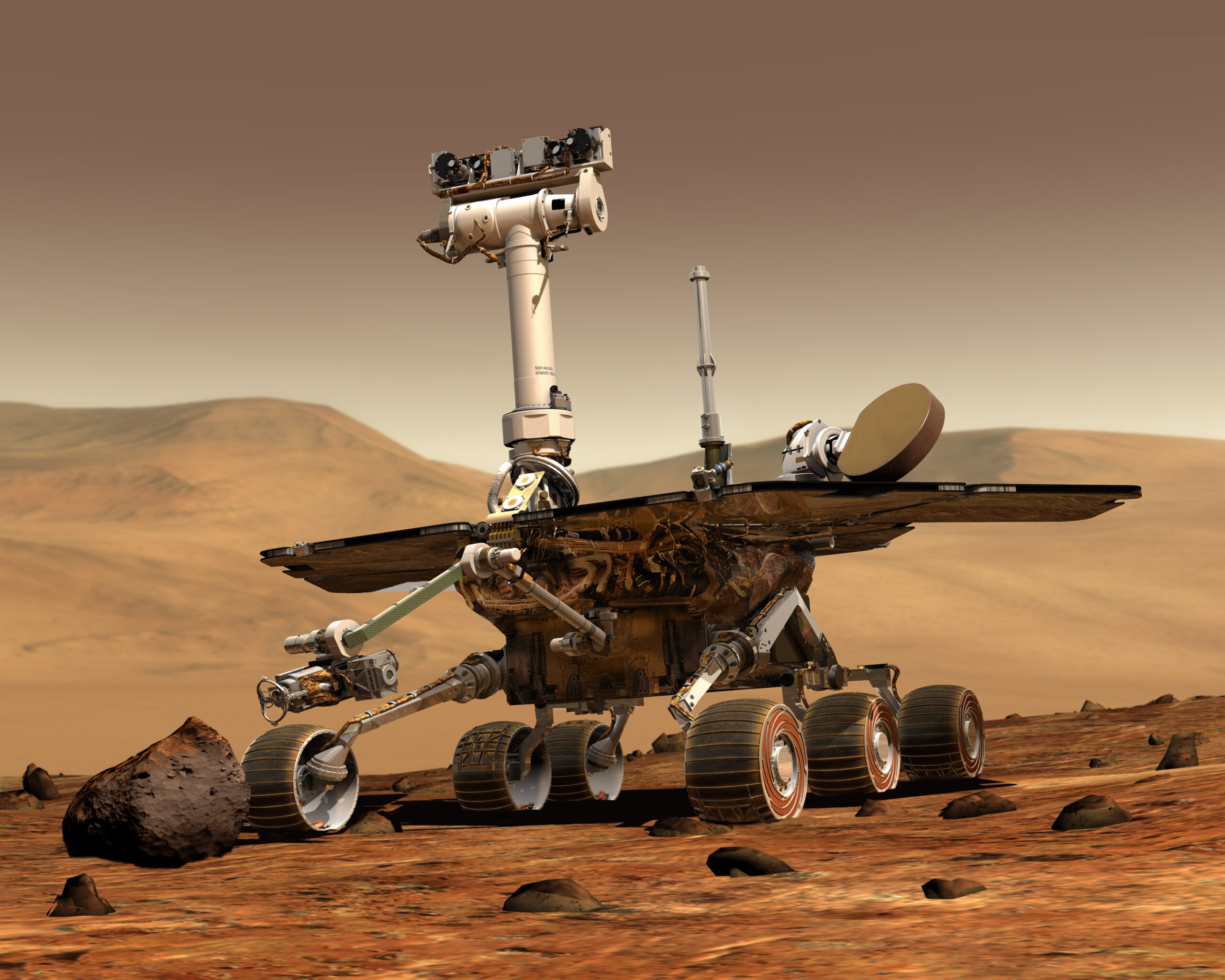
The Mars Curiosity rover recently accidentally cracked through the unremarkable exterior of a rock and found a surprise.
When the rover rolled its two-thousand-pound body over the rock, the rock broke open and revealed yellow crystals of elemental sulfur. Sulfates are fairly common on Mars. However, this is the first time sulfur has been found on the red planet in its pure elemental form.
The Gediz Vallis Channel, where Curiosity found the rock, is littered with rocks that look suspiciously similar to the sulfur rock before it got fortuitously crushed. This suggests that, somehow, elemental sulfur may be abundant there in some places.
Ashwin Vasavada is a Curiosity project scientist at NASA’s Jet Propulsion Laboratory. He said, “Finding a field of stones made of pure sulfur is like finding an oasis in the desert. It shouldn’t be there, so now we have to explain it. Discovering strange and unexpected things is what makes planetary exploration so exciting.”
Sulfates are mineral salts that form when sulfur, usually in compound form, mixes with other minerals in water. When the water evaporates, the mixture of minerals dries, leaving the sulfates behind. These sulfate minerals can tell us a lot about Mars. They reveal the water history of Mars, and how it has weathered over time.
Pure sulfur only forms under a very narrow set of conditions, which are not known to have occurred in the region of Mars where Curiosity made its discovery.
There are a lot of things we don’t know about the geological history of Mars. However, the discovery of scads of pure sulfur just hanging about on the Martian surface suggests that there’s something pretty big that we’re not aware of.
Sulfur is an essential element for all life. It is usually absorbed in the form of sulfates, and used to make two of the essential amino acids living organisms need to make proteins.
We’ve known about sulfates on Mars for some time and the discovery doesn’t tell us anything new in that area. We’re yet to find any signs of life on Mars. But we do keep finding the remains of bits and pieces that living organisms would find useful, including chemistry, water, and past habitable conditions.
We’re fairly limited in how we can access Mars. Curiosity’s instruments were able to analyze and identify the sulfurous rocks in the Gediz Vallis Channel. However, if it hadn’t taken a route that rolled over and cracked one open, it could have been sometime until we found the sulfur.
The next step will be to figure out exactly how that sulfur may have come to be on Mars. That may possibly involve some detailed modeling of Mars’s geological evolution.
Curiosity will continue to collect data on Mars. The Gediz Vallis channel is an area rich in Martian history. It is an ancient waterway whose rocks now bear the imprint of the ancient river that once flowed over them, billions of years ago.
Curiosity has drilled a hole in one of the rocks to take powdered samples of its interior for chemical analysis. The rover is now trundling its way deeper along the channel, to see what other surprises might be waiting just around the next rock. -

Space Medicine – MIT Conducts Osteoarthritis Research On International Space Station
A groundbreaking study on the International Space Station National Laboratory has led to a new tissue chip model that imitates the early stages of osteoarthritis after joint injuries.
Osteoarthritis is a common joint disease that affects over 650 million people worldwide. It can cause severe pain and stiffness in joints. There are few treatment options available.
The authors of the study have developed an innovative tissue chip model that can precisely recreate the early stages of post-traumatic osteoarthritis. This is a form of the disease that occurs after a joint injury.
Alan Grodzinsky is a biological engineering professor at the Massachusetts Institute of Technology. He elaborated on the pioneering experiments conducted aboard the space station. Grodzinsky’s team developed a tissue chip model that successfully mimics a joint environment using viable human cartilage, bone, and synovium co-cultures.
This model creates a crucial baseline for studying and testing treatments for PTOA which is a form of osteoarthritis that can develop following a traumatic joint injury. It affects about twenty percent of people who suffer from osteoarthritis.
Grodzinsky highlighted the importance of this breakthrough. He said, “This opens up new possibilities for testing drugs and interventions for osteoarthritis and other joint disorders. It could also aid in developing preventative treatments.”
The study’s success underscores the unique advantages of conducting biomedical research in space. The microgravity environment can accelerate the manifestation of certain disease characteristics, providing researchers with faster and more precise data.
The ISSNL’s microgravity environment played a critical role in the success of the experiment. It allowed the rapid simulation of osteoarthritis characteristics, which usually progress slowly on Earth.
Previous research has shown that bone loss accelerates in microgravity. This suggests that other musculoskeletal conditions might also progress faster. This allows for more efficient study and testing.
Some key findings from the study were published in Frontiers in Space. The tissue chip displays the remarkable ability to emulate both the initiation and progression of PTOA, as well as the effects of various treatments. The tissue chip effectively simulated the impact of commonly used anti-inflammatory and pain-relief drugs on joint tissues.
In addition, it demonstrated potential for evaluating a drug designed to stimulate cartilage growth and repair. This opens promising avenues for therapeutic intervention.
Grodzinsky emphasized the transformative potential of this research. He said, “By providing a platform for precise and controlled experimentation, the tissue chip model offers researchers a powerful tool to explore the mechanisms underlying joint diseases and develop targeted therapeutic strategies.”
This advancement is particularly critical because of the current lack of U.S. Food and Drug Administration-approved drugs specifically for treating or preventing osteoarthritis.
The research was also published in Upward which is the official magazine of the ISSNL. The ISSNL is a unique facility that supports research and technology development which are not possible on Earth. It is managed by the Center for the Advancement of Science in Space in partnership with NASA. The ISSNL provides access to the ISS’s microgravity environment for U.S. government agencies, academic institutions, and the private sector. -

Power – Virtus Solis Is Working On Solar Energy Systems In Earth Orbit
Virtus Solis wants to unlock a new era of reliable low-cost solar power for everyone around the globe. This Michigan-based startup hopes to build the first-ever solar farm in space. The plans of Virtus Solis were presented in April at the International Conference on Energy from Space in London.
John Bucknell is a former SpaceX rocket engineer who founded Virtus Solis in 2019. He suggested using SpaceX’s Starship to position a massive solar array in the Molniya orbit. Virtus Solis says this orbit would keep “one or more arrays in line of sight of ground stations 100% of the time.”
After the launch vehicle sends hundreds of satellites to space in a single journey, in-orbit robots would then help assemble the system. The completed system would convert sunlight into electricity and use a microwave receiver to beam focused energy to select Earth stations equipped with rectennas.
Dr. Edward Tate is a cofounder and CTO of Virtus Solis. He said, “A rectenna … it’s like an antenna with another circuit added to it that can convert RF into something usable. In fact, the receivers that we’ve got can be twice as efficient or more than a typical solar plant on the ground.”
Virtus Solis says on its website that “each five and a half foot satellite delivers one kilowatt of power to ground, “with its power beam able to ‘instantaneously’ deliver energy to fifty percent of the Earth’s surface at a given time. Satellites in the ‘highly eccentric’ Molniya orbit take roughly 12 hours to complete a cycle.
If the project is ultimately successful, this could be an attractive clean energy solution. On its website, the Virtus Solis explains why it decided a solar farm in space was the best option.
In part, it mentions the harmful nature of dirty fuels, which release heat-trapping gases and toxic particles when burned. This air pollution has led to an increase in crop-destroying weather events and has also been linked to severe health issues, including some cancers.
On-planet solar farms are unable to harvest energy from the sun around the clock, meaning that battery storage is essential for a grid to provide consistent power.
Virtus Solis says that it believes its technology is scalable, able to integrate with our current solar farms, and will address the challenge of providing reliable solar energy in regions that have long winters with limited daylight.
The startup surely has many years of research on the horizon before its system could be ready for safe and meaningful use. Virtus Solis won’t launch its first testing satellite until 2027.
Researchers have been steadily working on Earth-bound solar solutions. These would be much more feasible options to ensure our planet has reliable, non-polluting energy at a low cost.
For example, existing solar systems already save homeowners around $1,500 on their electric bills every year. They can keep the lights on during power outages.
Battery storage is traditionally expensive, as Virtus Solis notes. Although a number of companies have had success using cheap, abundant materials, like crushed rocks or pebbles, to ensure excess renewable power is available for future use. -

Habitats – NASA Working On MOMO Modulate Habitats For Lunar Missions
MIT’s Department of Architecture, AeroAstro, and the MIT Media Lab have joined forces to create MOMO, a revolutionary self-assembling lunar habitat. This initiative is not only focused on meeting the immediate needs of lunar missions like Artemis III but also intends to lay the groundwork for long-term lunar settlement.
The collaboration extends beyond MIT. It also involves NASA’s Marshall Space Flight Center and Johnson Space Center, SpaceX, and Brookhaven National Laboratory, reflecting a comprehensive approach to space exploration.
MOMO represents the collective efforts of MIT’s leading departments, uniting the fields of architecture, aerospace engineering, and media technology.
The team consists of Mateo Fernandez and Xdd44 from Architecture, Kevin Dunnell from the Media Lab, and Adam Boldi and Katie Chun from AeroAstro. This project embodies a multidisciplinary approach essential for tackling the complexities of space habitation.
At the core of MOMO’s design are two critical objectives. The design must maximize the efficiency of flat-packing habitats into SpaceX’s Starship HLS cargo space by utilizing modularity. These principles will not only optimize transport logistics but also enhance the habitat’s adaptability to various lunar conditions and missions.
Each MOMO module is carefully crafted using an aluminum frame paired with a high-density polyethylene membrane. This combination of frame and membrane will provide robust protection against the harsh lunar environment, particularly radiation, while maintaining lightweight properties crucial for space travel.
One of MOMO’s important features is its modular design. This allows each unit to be tailored for specific functions. Different modules can serve as airlocks, windows, photovoltaic panels, work desks, or exercise areas. This versatility ensures that the habitat can meet a variety of needs, from daily activities to scientific research. Safety and longevity are of paramount importance in space habitation. MOMO’s design includes replaceable modules. This means that in the event of damage, astronauts can swap out a compromised unit without having to replace the entire habitat. This approach enhances safety but also extends the habitat’s operational life.
MOMO is designed to support NASA’s upcoming Artemis III mission, slated for late 2026 or early 2027. It marks NASA’s first crewed lunar landing of the Artemis program. The habitat will play a critical role in establishing a human presence on the Moon, providing essential infrastructure for astronauts.
The chosen site for MOMO’s deployment is the Lunar South Pole. It is a region of significant interest due to its potential water ice deposits and favorable conditions for long-term habitation. This location will be critical for constructing future, more permanent lunar settlements.
Limitations of current extravehicular activity suits will hinder manual construction. The MOMO team has prioritized a self-assembling structure. With modules prefabricated on Earth, the habitat will self-expand upon deployment. This minimizes the need for extensive astronaut intervention and ensures efficient setup. The habitat’s innovative dodecahedron shape offers modularity and compactness which facilitate efficient folding and packing. This geometric design not only simplifies transport but also allows straightforward, reliable deployment on the lunar surface, showcasing a blend of elegance and practicality.
A MOMO habitat is equipped with all necessary facilities to sustain life on the Moon. It includes a bathroom, bed, and recreational space. This ensures that astronauts have everything they need to survive and thrive during their mission. All these amenities are critical for maintaining physical and mental health, fostering productivity, and ensuring mission success.
MOMO is intended to do more than support a single mission. It is an important stepping-stone towards permanent human settlements on the Moon. MOMO addresses the challenges of space habitation with innovative solutions. This is paving the way for a new era of lunar exploration. -

Space Debris – NASA Publishes A Report On Methods To Remove Space Debris In Earth Orbit
A recent NASA report outlines the most promising strategies for handling the growing space debris problem.
There are currently more than one hundred and sixty million pieces of space debris orbiting the Earth. Experts are worried that we could be on the verge of a destructive cascading orbital effect known as the Kessler Syndrome.
According to NASA’s new report, the problem isn’t quite as bad as previously thought. That is because the new strategies outlined in the report are more cost-effective than the space agency had previously anticipated for tackling the unsustainable space debris problem.
The new NASA report is titled ‘Cost and Benefit Analysis of Mitigating, Tracking and Remediating Orbital Debris’. It compares over ten different strategies for reducing the risk of collisions between satellites and space debris.
Avoiding these types of incidents is critical to our exploration of space. If a piece of space debris were to impact and shatter a satellite in orbit, the result would be to create many more pieces of space shrapnel. These, in turn, could break other satellites apart. The resulting cascade of debris would lead to an effect known as the Kessler Syndrome.
Samantha Lawler is a University of Regina astronomer. She expressed concerns that SpaceX’s Starlink satellites have brought us far too close to a Kessler Syndrome. With space debris traveling at approximately seventeen thousand mph, cleanup efforts are akin to “collecting bullets.”
The new report details over ten techniques, including space debris removal missions, better satellite shielding, and improved space debris tracking.
Jericho Locke is a NASA analyst and the lead author of the new report. He said, “This study allows us to start to answer the question: What are the most cost-effective actions we can take to address the growing problem of orbital debris?”
One of the best techniques outlined in the report is the act of reducing the post-mission disposal time. This refers to the amount of time a satellite is allowed to stay in orbit after its mission is completed. Reducing this time would significantly reduce the amount of junk in orbit at a relatively low cost.
NASA’s new report builds on an earlier report in 2023 written by a team of researchers from NASA’s Office of Technology, Policy and Strategy. The paper estimated the cost of space debris to satellite operators. This estimation included the cost of maneuvering to avoid debris.
Locke explained that “By measuring everything in dollars, we can directly compare shielding spacecraft to tracking smaller debris or removing fifty large pieces of debris to removing fifty thousand smaller ones,”.
Charity Weeden leads NASA’s OTPS. She said, “This study is part of NASA’s work to rapidly improve our understanding of that environment as outlined in NASA’s recently released Space Sustainability Strategy, by applying an economic lens to this critical issue.”
This week, a collaborative private sector effort to deal with space debris launched the Space Trash Signs initiative. The initiative analyzed the space debris problem by creating debris “constellations”. It also estimated the cost of removal of each of the pieces of space junk that make up these makeshift patterns. -
Transportation – NASA Working On Levitating Railway For The Moon – Part 2 of 2 Parts
Part 2 of 2 Parts
This flexibility and autonomy that will be provided by the lunar FLOAT system is particularly important for NASA because it is getting more and more serious about its lunar base, especially with the Artemis program.
The Artemis project will mark NASA’s return to crewed lunar exploration for the first time since the Apollo program ended in the 1970s. The ambitious initiative will not only return people to the moon, but also establish a sustainable permanent base there. In addition to scientific research, the lunar base is expected to serve as a steppingstone for other missions in the solar system, especially those aimed at Mars.
Michael D. Griffin is a former NASA Administrator. He said, “The goal isn’t just scientific exploration. . . It’s also about extending the range of human habitat out from Earth into the solar system as we go forward in time. . . In the long run a single-planet species will not survive. . . If we humans want to survive for hundreds of thousands or millions of years, we must ultimately populate other planets.”
The lunar railway project has passed NASA’s Phase 1 program and will now move on to Phase 2. Phase 2 is still a preliminary phase. NASA will fund it with six hundred thousand dollars. In Phase 2, researchers will study the impact of environmental factors on the system performance and longevity of the railway.
At the end of Phase 2, the researchers intend to have a working prototype of the lunar railway on Earth in conditions that simulate the surface of the Moon. If everything goes according to plan, it should be ready to go in around a decade.
The goal of the Fluidic Telescope project, is to create an innovative approach to building large optical observatories in space. Edward Balaban works at NASA’s Ames Research Center. He is leading the FLUTE project which aims to utilize fluidic shaping of ionic liquids to form large, adaptable optics. This technique permits the creation of expansive and versatile telescopic lenses that can be adjusted or reshaped while in orbit. This overcomes the limitations of traditional rigid materials.
Mahmooda Sultana works at NASA’s Goddard Space Flight Center. He is leading the ScienceCraft initiative. This initiative is dedicated to exploring possible contributions of Quantum Dot technology to space exploration. This particular project distributes Quantum dot-based sensors across the surface of a solar sail which converts the solar sail to an innovative imaging device.
Quantum dots are nanoscale semiconductor particles that can absorb and emit light at various frequencies. Their deployment across a solar sail allows the entire structure to function as a large, lightweight imager. This design utilizes quantum physics to facilitate scientific measurements across vast distances. This technology would give us increased capability to conduct detailed observations without the need for heavy, traditional spacecraft equipment.
John Nelson is the NIAC program executive at NASA Headquarters in Washington. He said, “These diverse, science fiction-like concepts represent a fantastic class of Phase II studies. Our NIAC fellows never cease to amaze and inspire, and this class definitely gives NASA a lot to think about in terms of what’s possible in the future.” -

Transportation – NASA Working On Levitating Railway For The Moon – Part 1 of 2 Parts
Part 1 of 2 Parts
While there are many articles being published about private companies in space, it is easy to forget just how much groundbreaking research NASA is carrying out. NASA’s research is not all about space flight and telescopes, either. The goal of some NASA research is to support other space operations such as a base on the moon.
A lunar railway system, a fluid-based telescope, and a solar sail with quantum sensors are just some of the projects being pursued as part of ‘NASA’s Innovative Advanced Concepts ‘ program. NIAC is a NASA program for the development of far reaching, long term advanced concepts by “creating breakthroughs, radically better or entirely new aerospace technology”. The NIAC program funds work on revolutionary aeronautics and space technology that can dramatically impact how NASA develops and conducts its missions. The NIAC program aims to nurture and support visionary projects that can revolutionize space exploration including lunar bases. NASA has recently selected six concept studies for additional research and development.
To construct a base on the moon, one of the first things you must have is a reliable payload transport system. If you are sending materials from Earth, you need to be able to transport them from the landing pad to the lunar base once they have arrived on the Moon. For this, NASA is developing plans for an autonomous, magnetic railway system called the Flexible Levitation on a Track. Based on current plans, the railway could be available as soon as the 2030s.
FLOAT intends to use magnetic robots that can levitate over a thin flexible film track. The FLOAT project is led by Ethan Schaler from NASA’s Jet Propulsion Laboratory in Southern California.
The film and its support infrastructure consist of a graphite layer that allows robots to float passively via diamagnetic levitation, a flex-circuit layer that creates electromagnetic thrust for controlled movement along the tracks, and an optional solar panel layer that produces power for the base station when exposed to sunlight.
Unlike robots that use wheels, legs, or tracks to move, FLOAT robots would have no moving parts and would levitate above the track. This would reduce abrasion and wear from lunar dust which is very abrasive. This will make FLOAT significantly more efficient than any conventional rail systems for lunar applications.
FLOAT has two main applications. The first is to transport payloads between the landing pad and the lunar base. The second is to transport regolith that the base would mine itself.
According to the planned project, individual robots will be able to transport payloads of up to one hundred tons per day, at speeds of over one and two tenths’ miles per hour. For lunar installations, this is an effective speed. It won’t require much preparation to set up. The film could be basically rolled or moved depending on the mission requirements. Even in the rugged lunar environment, FLOAT should be robust enough for a lunar base’s needs.
Please read Part 2 next