I have blogged before about the effects of space travel on human health. There are a variety of negative effects on different organs in the human body caused by either zero gravity or space radiation. Today I am going to report on a study of the brains of Russian cosmonauts following their time spent in orbit around the Earth.
Floris Wuyts is a neuroscientist at the University of Antwerp. He led a team that has just published an article in The New England Journal of Medicine. The brains of ten Russian cosmonauts were scanned using a magnetic resonance imaging prior to their being sent to the International Space Station. Nine days after their return, they were scanned again. All of the cosmonauts are male with a mean age of forty-four. The average time spent in the ISS was one hundred and seventy-nine days. Seven of the ten also had their brains scanned about two hundred days after their flight to investigate their recovery from time in space.
The gray matter in the brain consists of neuronal cell bodies, neuropil, glial cells, synapses, and capillaries. What the researchers found was that there was a reduction of up to three and three tenths of a percent in gray matter during the time the cosmonauts spent at the ISS. The follow up scan after two hundred days found that while gray matter had rebounded, it had still not returned to the level found in the preflight scans.
White matter in the brain consists of bundles of nerve fibers sheathed in myelin. The myelin sheaths increase the speed of transmissions between different parts of the brain. It turns out that the volume of white matter in the brain did not changes while the cosmonauts were in orbit. However, after the two hundred day waiting period, the brain scans revealed that white matter had decreased after the cosmonauts returned from orbit. The research team believe that long term changes in cerebrospinal fluid following return to Earth might be involved but more research is needed to verify that.
The cerebrospinal fluid that bathes the brain was found to have increased during the time that the cosmonauts spent in orbit. The primary focus of this research was to track changes in the volumes of brain tissue. No work was done to find out if these changes had an effect on the cognitive abilities or the behavior of the cosmonauts.
Angelique Van Ombergen is a postdoctoral researcher at the University of Antwerp. She said that it was not clear why the lack of gravity in orbit caused these specific changes to the volume of brain tissue. The best current theory suggests that without gravity pulling fluids down in the body, the fluids move up into the torso and head of the astronaut while in orbit. She said in an email that, “We believe all the changes we see here are due to this fluid shift.”
Van Ombergen also said, “The neat thing about MRI brain scans is that they allow multiple aspects of the brain to be investigated. The current study is only approaching one aspect, but we can also study white matter tracts more in detail, as well as brain connectivity.”
More astronauts are being recruited by the research team. Possible effects on cognitive ability from prolonged space flight will be studied next. Van Ombergen said, “A priority, in my opinion, is that future studies should also be set up to look at how these brain changes translate to the clinical performance of astronauts,” she explained. “For example: does it impact their cognition? How exactly can these brain changes be related to visual changes in space travelers? Such questions are necessary in order to better understand what’s going on and to prepare astronauts better for future missions.”
-

Researchers At The University of Antwerp Study Brains Of Cosmonauts After Long Space Missions
-

Using Mirrors In Orbit To Illuminate The Earth’s Surface
A solar mirror is an object with a reflective surface that is used to reflect the light of the Sun. Solar mirrors have many uses such as concentrating solar radiation for heating or the generation of electricity. When placed in orbit around the Earth, solar mirrors are referred to as Space Reflectors and could provide illumination at night for a specific area.
In 1992, Russia began a series of experiments on SRs made from solar sails with the intention of providing illumination for far northern cities that receive much less sunlight in the winter months. None of the experiments were successful in illuminating the Earth’s surface and the Russians gave up in 1999.
Last January, Rocket Lab, a private U.S. space company launched a reflective mini-satellite into orbit around the Earth to create an artificial star which they called Humanity Star. It is a sphere about three feet in diameter and has a surface with seventy-six reflective panels. It was launched into a polar orbit and circled the Earth once every ninety-two minutes. The orbital distance varied between one hundred and eighty and three hundred and twenty miles.
The satellite was intended to orbit for nine months but it burned up on reentry after orbiting for only a couple of months. Humanity Star was bright enough to be seen by the naked eye from the surface of the Earth. The website for Humanity Star says, “the Humanity Star was designed to be a bright symbol and reminder to all on Earth about our fragile place in the universe.”
Astronomers were critical of the Rocket Lab project. They complained that reflective objects in orbit can interfere with astronomical observations. Supporters of the project pointed out that flares of light from the International Space Station and other satellites are much brighter than the light from Humanity Star.
China has just announced plans to send an ‘artificial moon’ into Earth orbit in 2020 to provide night time illumination in urban areas. Their first SR will orbit above the city of Chengdu which is the capital of the Sichuan province. If the first SR is successful, then another three will be launched by 2022.
Chinese scientists estimate that the SR will about eight times as luminous as the actual moon when it is full. It will only orbit at around three hundred and ten miles above the Earth. The actual light provided for city streets will only be about one fifth of the illumination currently provided by street lights.
It is estimated that the SR could save the city about one hundred and seventy-three million dollars by reducing the cost of electricity currently used for street lights. It could also help first responders to natural disasters when the power grid goes down and there are no street lights.
Wu Chunfeng, chief of the Tian Fu New Area Science Society, has been interviewed
about the plan. He called for more testing to be sure that the plan is viable and that such artificial illumination will not cause problems for the natural environment. He also said, “We will only conduct our tests in an uninhabited desert, so our light beams will not interfere with any people or Earth-based space observation equipment.” -
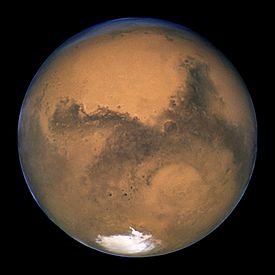
SpaceX Is Working On The Big Falcon Rocket – Part 5 of 5 Parts
Part 5 of 5 Parts
Cáceres discussed an estimation of the development and construction cost of the first BFR. He said, “If I had to venture to guess, I would say it would be somewhere in the $4 billion to $5 billion range.” He said that if there are severe problems and setbacks, the cost could be much higher than that. He added that, “That’s why so many government space programs tend to be so expensive — because they just go on and on, forever and ever, for technical reasons as well as budgetary and political reasons.”
Cáceres suggested that if SpaceX gets far enough in the development process for the BFR to be taken seriously, NASA might be interested enough to provide some assistance and funding. He said, “Ultimately, BFR could become a joint US government-SpaceX program. That would be my guess, eventually, because as much as I admire the success of SpaceX, this just seems like something too massive and too complicated for one company alone to handle.”
SpaceX has an upcoming mission to send astronauts to the International Space Station. If SpaceX can successfully carry out this mission with its Falcon 9 or Falcon heavy launch vehicle, this will improve the odds that they can move forward successfully with the BFR program. Repeated SpaceX missions to the ISS will add increasing confidence in the space industry that SpaceX is capable of advanced missions such as the BFR.
SpaceX has announced that the first mission for the BFR will be to take a space tourist around the Moon. If this mission is successful, it will be huge public relations coup. NASA and Congress cannot help but be impressed and motivated to invest in the program.
Beyond the Lunar tourist mission, Musk intends to use the BFR to explore and colonize Mars. He said, “The first journey to Mars is going to be really very dangerous. The risk of fatality will be high; there’s just no way around it. It would be basically: Are you prepared to die? And if that’s OK, then you’re a candidate for going.”
Cáceres response to Musk’s statement was, “I immediately thought: That’s not something that any representative, any CEO from a company, or any NASA administrator would say. That’s about as blunt as you can be, and I think he was being very truthful.”
Chris Hadfield is a retired astronaut. He pointed out that other periods of exploration were quite deadly as sailors explored the oceans of Earth on voyages that lasted for years. He said, “The majority of the astronauts that we send on those missions to Mars won’t make it.” Still, astronauts will probably be ready to attempt to travel to Mars because there have already been volunteers for the first private Moon landings.
Cáceres continued, “If we want to actually open space to average people rather than government astronauts, then we’ve got to accept that there’s going to be a lot of fatalities. We can either decide that that’s acceptable or it’s not, in which case we don’t explore space any more than we have already. SpaceX is going to fail in the future — rockets are going to explode, and people are going to die is what everyone has to totally understand.” -

SpaceX Is Working On The Big Falcon Rocket – Part 4 of 5 Part
Part 4 of 5 Parts
Steve Nutt said, “There are so many different parts of this thing, the complexity is daunting. There will have to be a variety of materials and joining methods to accomplish everything this has to accomplish. When a metal part gets damaged, there’s usually a dent or a scratch or something like that. With composite parts, there can be damage and no manifestations at the surface. It’s all subsurface.”
All of the carbon fiber sections will have to be carefully checked for flaws in every square inch with ultrasound scanners. Cáceres said, “You may have some structural problems on an aircraft, but the aircraft won’t explode,” Cáceres said. “But on a rocket, leaks, cracks, and instability — those things can be catastrophic. It explodes and people die. When you’re building something this big, the only real way to test it is once you’ve completed it, and you launch it. You better have a lot of money, because you’re probably going to go through a lot of big, big structures before you get the one that works.”
SpaceX has suffered serious accidents and failures with its current fleet of rockets. Musk will certain run extensive tests and checks on components and, ultimately, on the full prototype of the BRF before any missions are flown. Nutt said, with respect to going to Mars, “It’s such a long mission. I think the chances of some kind of damage or failure en route are much greater than a mission of days or weeks that we’ve seen in our lifetime.”
Tiny pieces of rocks or comet dust in deep space can be very dangerous to a spacecraft because they are traveling at thousands of miles per hour. One strike by a tiny object could cripple and end a deep-space mission if it does not have the ability to carry out repairs during the mission. Nutt said, “Those things can go right through any kind of structure and do a lot of damage.”
It is very hard to repair carbon fiber composites even on Earth. Some jet fights employ carbon fiber composites. If there is a hole in a section of the fuselage, workers sand and polish the damaged area, use trowels to lay down layers of fresh epoxy, put the damaged section in a vacuum chamber and subject it to heat.
Nutt said, “Things that you might be able to repair with some difficulty on Earth are orders of magnitude more difficult to execute and accomplish in space. It’s a big structure with a lot of components. The chances of failure are not zero. So you have to worry about those things and have contingency plans for all of them.”
Cáceres said that each launch of the BFR may costs around ten million dollars with most of the cost being for fuel because each BFR will be used many times. SpaceX’s Falcon Heavy launch vehicle costs about one hundred million dollars for each launch. Each Falcon Heavy can only lift half the weight that can be sent into space by the BFR.
Please read Part 5 -

SpaceX Is Working On The Big Falcon Rocket – Part 3 of 5 Parts
Part 3 of 5 Parts
The creation of a huge carbon fiber structure faces a number of serious technical challenges. The epoxy used to create carbon fiber composites cures at room temperature. Each different kind of epoxy has its own rate of curing. The type of epoxy that is most often used in manufacture of airplane sections will only last for about four weeks before it has cured too much to be applied. That means that sections of the BFR will have to be built within about a month.
Carbon fiber composites can be damaged by coming into contact with super cooled liquids such as the liquid methane and liquid oxygen that will be used to fuel the BFR. In 2016, a SpaceX rocket was destroyed on the launch pad because a carbon-fiber-wrapped tank filled with super-cooled liquids exploded. Musk said that the tank failed due to cracking and leaking. Last year, Musk said that SpaceX had created a stronger tank that could handle the very low temperatures of the fuels.
In order to test their new tank, SpaceX built the biggest carbon-fiber-composite fuel tank ever constructed. They put it on a barge, towed it out to sea, filled it with super-cooled liquids and increased the pressure in the tank until it exploded.
Another big potential problem is the fact that if the epoxy does not cure properly and completely, there could be flaws that would be very hard to detect that could bring missions to a disastrous end. In order to prevent this, carbon fiber composites have to be squeezed under very high pressure to collapse voids, push out bubbles and ensure strong bonds.
Autry said, “That’s typically done with a giant pressurized oven, like a pressure cooker, that’s called an autoclave. But these things are very expensive.” Marco Cáceres is a senior space analyst at the Teal Group. He said that it cost Boeing almost three hundred million dollars to build a huge autoclave for pressure treating sections for the 787.
An autoclave big enough to cure sections for the BFR would cost much more than the Boeing autoclave. He suspects that SpaceX may try a different approach to curing sections of the BFR. He says that SpaceX could make an oven to cure the BFR sections. This could be as low as one tenth the cost of an autoclave. SpaceX could put each cured section of the BRF in a giant plastic bag, draw all the air out to squish the carbon-fiber-layers together and then heat the bag in a giant oven.
Following the curing and pressure heating of the sections of the BFR, the mandrels would be taken apart and removed from the sections of the BRF and then the several sections would be fused in some way to create a single fuselage. Boeing used fifty thousand metal fasteners to connect the segments of the fuselage for the 787. Many of the fasteners had to be replaced and several of the first planes produced failed pressurization tests. These problems would be much worse for a spacecraft. Temperature differences encountered by different components of a spacecraft can be hundreds of degrees. Different materials used in the construction of spacecraft expand and shrink at different rates under temperatures changes.
Please read Part 4 -

SpaceX Is Working On The Big Falcon Rocket – Part 2 of 5 Parts
Part 2 of 5 Parts
SpaceX says that when all the components and tests have been completed, the rocket will carry the spacecraft above the Earth and then detach itself to fly back to Earth for inspection and refueling. The spacecraft will fire its engines and achieve Earth orbit. The president of SpaceX says that this might happen as early as 2020.
It will take most of the liquid methane and liquid oxygen fuel in the spacecraft section to get to Earth orbit. SpaceX says that following the entry into Earth orbit, SpaceX will launch tanker spacecraft which will rendezvous with the first spacecraft. It may take as many as a dozen refueling flights and rendezvous’ to fill the tanks of the spacecraft. One of SpaceX’s Mars development engineers has said, “We go from getting 100 tons or more into low-Earth orbit, then refill, and we can take that payload pretty much anywhere — including the surface of Mars.”
If the proper infrastructure on Mars is available, liquid methane and liquid oxygen can be manufactured and used to refuel the spacecraft that are sent to Mars by using water in Martian soil, carbon dioxide in the Martian atmosphere and electricity from the solar panels.
Musk’s plan calls for the entire spacecraft to be constructed from advanced carbon fiber Composites. Composites of carbon fiber contain huge quantities tiny but extremely strong threads made of carbon. These threads are often woven into a fabric which is then embedded in a glue-like epoxy. Once cured in an oven, the epoxy hardens into an extremely strong resin surrounding and penetrating the carbon fiber fabrics. Carbon fiber structures require only one fifth of the material need for steel structures and many types are even stronger than steel. Carbon threads are also able to be made into materials that have similar properties to aluminum but are only half of the mass of aluminum. Together you wind up with a material stronger that steel and lighter than aluminum.
Musk is convinced that the BFR will require such a construction material to live up to expectations. However, building huge structures such as the BFR with carbon fiber can be very difficult. Nothing like the BFR has ever been constructed. The Boeing 787 Dreamliner is about fifty percent composites by weight.
Musk has shown pictures of a metal cylinder about thirty feet in diameter which he said was a tool that will be used to construct the BFR. Analysts think that the cylinder is something called a “mandrel” which is used to apply carbon fiber materials. No one has ever built a mandrel as big as the object showing in Musk’s pictures. As a mandrel rotates, a robot moves along wrapping rolls of carbon-fiber tape around the cylinder.
Greg Autry is the director of the Southern California Spaceflight Initiative and an expert on the space industry. He told a reporter that “You lay layer upon layer of the material. If you’re going to make a spacecraft part, you’d probably have dozens of layers of material on top of each other.”
Please read Part 3 -
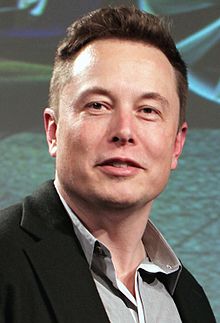
SpaceX Is Working On The Big Falcon Rocket – Part 1 of 5 Parts
Part 1 of 5 Parts
Elon Musk has been in the news a lot lately for a variety of reasons. A lot of the stories have to do with his obsession to send astronauts to Mars. His company, SpaceX, is working on a new rocket dubbed that Big Falcon Rocket which will figure in his plans for Mars missions.
A full-scale prototype of the BFR is being developed in a huge white tent located at the Port of Los Angeles. The BFR will consist of a one hundred and fifty-seven-foot-long spacecraft on top of a one hundred a ninety-one tall rocket booster. This is equivalent to the height of a thirty-five-story building. When it is fully fueled, it will weigh almost nine million pounds. The specifications say that it can carry one hundred and fifty tons of cargo to Mars along with a hundred passengers. And, Musk claims that the entire system will be reusable.
Analysts say that this is the most ambitious space project ever attempted. They say that it is at least an order of magnitude beyond the lunar missions. Steve Nutt, a professor of chemical, aerospace and mechanical engineering at the University of Southern California, said, “It sounds like science fiction.” MusK is keeping the BFR program secret and no one has revealed any details. SpaceX has refused repeated requests for interviews or on-the-record comments about the project. The big question is how SpaceX can possibly build the giant spaceship on the schedule they have provided for completing the project.
With no information forth coming about the project from SpaceX it has been left to reporters to question experts in related disciplines to try to develop an understanding of the problems that the project must solve including potential building materials, advanced assembly processes. safety inspections and projected costs. Some commentators say that the most important question of all has nothing to do with the technical details. That question is whether or not the global community will be able to deal with probable disasters and fatalities related to some of SpaceX eventual Mars missions.
Musk has said that eventually, the BFR is intended to replace all of the current models of rockets and spacecraft currently in use by SpaceX. SpaceX has recently raised hundreds of millions of dollars, much of which will probably go to the development and construction of the BFR. SpaceX has recently been talking about sending a space tourist around the Moon. The research and development for this project will most likely assist the development of the BFR. SpaceX has six thousand employees and more and more of them are getting assigned to the BFR project.
Musk intends to complete development of the BFR sometime in 2019. The project in Los Angeles began last December so the schedule calls for the completion of the prototype BFR in from twelve and twenty-four months. For comparison, the NASA space shuttle orbiters each took about five years to complete.
Following its completion, the prototype BFR will probably be carried through the Panama Canal to a port in Texas and taken by truck to the SpaceX facility in Southern Texas. Once there, the BFR will be subjected to a series of tests. At the same time as this is playing itself out, SpaceX will be working to complete the permanent BFR factory being built at the Port of Los Angeles. The facility will cover about two hundred thousand square feet.
Please read Part 2 -
Japanese Universities And Companies Are Working On A Space Elevator
Last week I blogged about the history of the idea of a space elevator that could reach all the way beyond an anchor in geosynchronous orbit. Cargo and people could be moved to and from orbit in elevator cars traversing the elevator. Today I am going to talk about current work and future plans for such a construction.
A major international study was carried out and a report issued in 2012 concluded that it would be possible to build such a space elevator but the best results would require international co-operation. Many Japanese universities have been working to solve technical problems for such a project. A group at Kanagawa University is developing designs for the robotic cars that will climb the elevator.
Professor Tadash Egami at Kanagawa University said, “We’re studying what mechanisms are needed in order to ascend at differing altitudes and the best brake system. “I don’t think one company can make it, we’ll need an international organization to make this big project.”
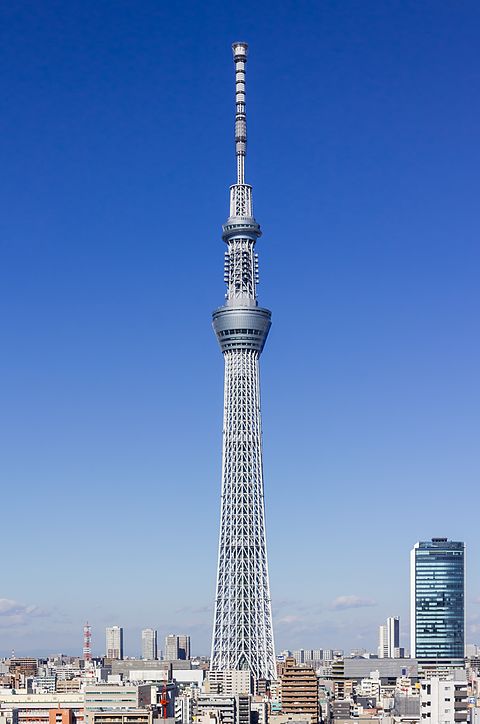
Obayashi is one of five giant Japanese construction firms. It has its headquarters in Minato, Tokyo but was established in 1892 in Osaka. It operates all over the world. One of its projects was the Tokyo Skytree which is a broadcasting, restaurant and observation tower in Sumida, Tokyo. It is the tallest tower in the world at a little more than two thousand feet.
Obayashi has announced plans to build a sixty-thousand-mile high space elevator. Robotic cars will use magnetic linear motors to carry cargo and people to a new space station at fraction of the current cost of chemical launch vehicles. Using current technology, it costs about ten thousand dollars a pound to send a payload into Earth orbit. Estimated cost of sending that same pound to orbit via space elevator is about a hundred dollars. They estimate that the trip will take seven days to reach from Earth to the space station.
The elevator will be constructed from carbon nanofibers. A R&D manager at Obayashi said, “The tensile strength is almost a hundred times stronger than steel cable so it’s possible,” Mr Yoji Ishikawa, a research and development manager at Obayashi, said, “Right now we can’t make the cable long enough. We can only make 3-centimetre-long nanotubes but we need much more… we think by 2030 we’ll be able to do it.”
The space station reached by the elevator could be host to small rockets that could carry out orbital missions without the need for huge amounts of fuel to boost such rockets from the ground to Earth orbit.
Solar power satellites have been discussed for decades as a source of inexpensive, pollution free power. With the advent of a space elevator, the cost to construct such solar power stations would plummet.
Space tourism has also been discussed for decades. Obayashi is designing robot cars for elevators that can carry as many as thirty people. Personally, I don’t think that it will be a major industry even with a space elevator.
A space elevator is a fantastic idea which just might be possible. It would make exploration and exploitation of space much cheaper and easier. However, beyond the technical problems, there are many political, economic, and security issues that will have to be solved in order for it to become a reality. -

The History Of Space Elevators
When I was a little kid long ago, I read a comic book where a man in a spacesuit climbed a ladder all the way to space. It turns out that an elevator to space was first written of in 1895 by the Russian scientist, Konstantin Tsiolkovsky. In 1979 two different novels were published by well-known science fiction authors that featured the construction of the first space elevator. The novels shared some similarities but were just a case of an idea whose time had come.
The basic idea of a space elevator is to have a tower that reaches all the way from some spot on the equator to some sort of massive anchor like an asteroid in geosynchronous orbit and beyond. This would make moving materials and people up to orbit and down to Earth much, much cheaper than the current system of launching such payloads by chemical rockets as is currently the practice. There are many technical problems that would have to be overcome before such a space elevator would even be theoretically possible.
As the private space industry ramped up in the past couple of decades, there was a surge of interest in what were called tethers. These would be strong cables that could be used for many purposes in space and also serve as possible path forward toward space elevators. Tethers could be used to deorbit satellites when they reached the end of their life. Long strong tethers could rotate above the surface of the Earth and be used to raise and lower cargo to and from orbit. There were even designs for tethers that could be used to raise a spacecraft from Earth orbit to escape velocity for missions in deep space. Tethers Unlimited is a space industry startup that was founded in 1994 to explore tether technology. Unfortunately, interest in tethers waned and TU has had to develop and sell other space technology in order to survive.
One of the first things needed for an actual space elevator would be an incredibly strong material that would be able to handle the enormous stresses that would have to be endured by such a structure. The discovery and development of carbon nanotubes may be the basis of materials strong enough to create space elevators.
Another problem that has to be addressed is the problem of moving an asteroid into geosynchronous orbit to serve as an anchor. A space industry startup called Made in Space has sent a 3D printer to the International Space Station for testing. This company has published plans for sending a probe with a 3D printer to rendezvous with an asteroid. Once there, the plan is for the probe to deploy the printer and use asteroid materials to build a mass driver and a navigation system that would permit the asteroid to fly itself to a convenient location such as a Lagrange point in the Earth-Moon system or a geosynchronous orbit above the Earth.
Now that some realistic technologies are being develop that could lead to a space elevator, space industry companies and universities in Japan have committed to developing a space elevator. Some of these efforts will be explored in my next post.
-

Lockheed Martin Is Working On Space Habitat For NASA
NASA has split a sixty-five million dollars grant among six contractors to build a prototype space habitat by the end of this year. The contractors include Lockheed Martin, Boeing, Sierra Nevada Corporation’s Space Systems, Orbital ATK, Nanoracks and Bigelow Aerospace. NASA will evaluate each of the prototypes and proposals in order to better understand the systems and interfaces that are required to facilitate living in space for extended periods of time.
Lockheed is using the Donatello Multi-Purpose Logistics Module for their prototype. Originally the Donatello was constructed the purpose of conveying cargo to the International Space Station, but it was never put into service. Lockheed has refurbished a Donatello module for their entry into the NASA competition.
The Donatello is about fifteen feet wide and over twenty two feet long. It is about the size of a small bus. There are racks for equipment, life support systems, sleeping stations, exercise machines and workstation used to control robots. It will be close quarters for four astronauts to spend a month or two in the module.
Bill Pratt, the Lockheed program manager, said “You think of it as an RV in deep space. When you’re in an RV, your table becomes your bed and things are always moving around, so you have to be really efficient with the space. That’s a lot of what we are testing here. We want to get to the moon and to Mars as quickly as possible, and we feel like we actually have a lot of stuff that we can use to do that.”
The Lockheed team is using augmented reality headsets to help them visualize what the interior of the module will look like with all the equipment and furnishings installed.
NASA is working on the development of a habitation module for long missions to take astronauts to the Moon and Mars. The module that is selected in the competition will be attached to the Deep Space Gateway that is being developed to orbit the Moon and serve as a way station for deep space missions.
The DSG will be much smaller than the International Space Station which weighs in at four hundred and fifty tons. The DSG will only weight about seventy-five tons and will include a habitat module, an air lock, a propulsion module, a docking port and a power bus.
NASA is collaborating with private contractors on the Space Launch System which includes the construction of the Orion spacecraft which will be the most powerful rocked ever built. The habitat and other modules will be attached to and launched by the Orion. They hope to test an unmanned Orion in a mission to orbit the Moon by 2020. If all goes as planned, there will be an manned Orion mission to the Moon in 2022.
The Orion rocket has been under development since 2004. One reason for the long development effort is related to the fact that it has to be a deep space craft able to handle the stress of a thousand-day mission to Mars. The Apollo mission allowed a small number of weld defects per inch. The Orion rocket specifications call for no weld defects at all.
The general manager of Lockheed Martin’s space division said, “This is the infrastructure for sustained human space exploration and so you have to account for every scenario that could come up, that’s why the requirements are so stringent.”
Next month, the European Space Agency will deliver the European Service Module which will be installed below the habitat module on the Orion.