Part 2 of 2 Parts
Kimaitha says, “The Space market has changed dramatically. It’s not the same market we had a few years ago. It is changing in response to a requirement for connectivity,” says Kimaitha.
In July, Nigeria’s National Space Research and Development Agency issued a request for proposal. They were looking for a public-private partnership arrangement to supply up to ninety percent of its citizens with faster, cheaper and more reliable internet by 2025.
The main objective of the South African Development Community is to “achieve development, peace and security, and economic growth, to alleviate poverty, enhance the standard and quality of life of the peoples of Southern Africa, and support the socially disadvantaged through regional integration, built on democratic principles and equitable and sustainable development. Angola, Botswana, Comoros, Democratic Republic of the Congo, Eswatini, Lesotho, Madagascar, Malawi, Mauritius, Mozambique, Namibia, Seychelles, South Africa, Tanzania, Zambia, Zimbabwe are included in the SADC.
South Africa’s first private prospective satellite operator MzansiSat recently announced plans to all SADC region countries. Other local commercial satellite firms in the continent include Nigeria Communication Satellite and publicly traded Egyptian Satellite Company.
Elon Musk’s SpaceX is working on developing a satellite constellation called Starlink. It will enter the African broadband market with launches scheduled from late 2021 and early 2022.
SES Network recently unveiled “03b mPower”, its next generation of satellites. It has plans to initially launch eleven high-speed satellites into Earth orbits that will supply global coverage including Africa. SES says that is is targeting governments for public-private partnerships in order to expand internet connectivity into remote areas of Africa. It intends to boost the resilience of mobile network operators and support landlocked countries in efforts to bridge the equality gap through connectivity.
Kamaitha said, “We have countries that are landlocked that do not have access to undersea cables and have to go through multiple countries to get connectivity. There is still demand for good connectivity in those markets and satellite is an answer.” Countries in the Sahel region like Chad, Niger and Mali represent a huge opportunity according to Kamaitha because they are big and landlocked.
Kamaitha listed an increasing need for enhanced security and Intelligence, Surveillance, and Reconnaissance as key areas raising governments demand for satellite connectivity while a rise in adoption of the Internet of Things including smart-connected homes was creating demand on the commercial side.
Kamaitha said, “The big equation is to explore financing models. Where we have been successful with governments has been where we talk about having things like PPPs, where governments, funding entities or private sector comes in and the solutions can be delivered.”
In Burkina Faso, SES was offering e-governance solutions and connectivity between provinces. In Ethiopia, SES carried out a capacity building exercise and mass training of young people on basic knowledge of installing and maintaining different V-sat technologies.
Space in Africa estimates that the African space market will exceed ten billion dollars by 2024 boosted by rising investments.
-

The Development of African Connectivity – Part 2 of 2 Parts
-

The Development of African Connectivity – Part 1 of 2 Parts
Part 1 of 2 Parts
I have blogged about the countries with major space programs as well as a lot of private enterprises. Today, I am going to talk about space program in an area of the world that often gets much less attention than it deserves. Africa covers about twenty percent of the land on Earth. It contains roughly a quarter of the internationally recognized countries in the world. The population of Africa is about sixteen percent of the population of the Earth. And yet, the international mainstream media seems to pay much less attention than they should to this continent.
Many countries in Africa are hoping that the rising demand for connectivity can be satisfied by satellites. Fast changing data consumption patterns and the growing need to bridge the digital divide in land-locked African countries have been driving the demand for internet connectivity which has grown rapidly over the past two years. This growth in demand has been fueled by Covid-19 disruptions that have significantly changed the was that African consume data.
More than ever before, people across the world are working from home and a significant percentage of the population are taking online classes. A wave of innovation in the technology sector across the African continent has pushed up demand for internet connectivity. The African internet penetration rate is currently just thirty nine percent which means that over sixty percent of the African population has no access. These numbers were provided by Caroline Kamaitha who is the SES Networks African Vice President. She says that governments are now forging ahead to ensure that all of their citizens get the internet access that they need. She added that “Governments are taking a really huge step to ensure that their people in those different countries are able to get connectivity.”
Smart Africa Secretariat is a pan-African alliance of thirty two African countries. It has set a target to double broadband penetration. It has also made a commitment to cutting the cost of internet access in half by 2025 on non-terrestrial network solutions. This means that satellite networks will be required to meet these commitments.
Over the past decade, there has been an increase in activities in the African space market. Governments and private sector players as well as foreign investors are ramping up efforts towards increasing satellite-based connectivity. Kamaitha said, “Each country has some sort of space program … we have as well countries across Africa that have gone and built their own satellites for their sovereign and commercial use.”
By April 2019, eight African countries including Kenya, Ghana, Morocco, Egypt, Algeria, Nigeria, South Africa and Angola had launched thirty-two national satellites into Earth orbit. This information was provided by the annual African Space Industry report for 2020.
Space in African is a media, analytics and consulting company. Their analysis indicates that African countries has spent over four and a half billion dollars on satellite projects with at least twenty one out of fifty-four African nations having a space program or they are in the process of creating a space program.
Please read Part 2 next -
Russians Blame U.S. Female Astronaut For Leak In The International Space Station in 2018 – Part 2 of 2 Parts
Part 2 of 2 Parts
An unnamed “high ranking” Russian official with Roscosmos, the Russian Space Agency, made a startling claim in Tass, the Russian news agency on August 12th of this year. Tass reported that the official claimed that Auñón-Chancellor, an American astronaut assigned to the International Space Station had suffered an emotional breakdown in 2018 which caused her to sabotage the Russian Soyuz spacecraft in the hope that she would be able to return to Earth before her mission was done. The Tass article claimed that the NASA videos of the U.S. astronauts may have been tampered with. They also claimed that the Russian officials were denied the opportunity to examine Russian tools on the ISS and to administer polygraph tests to the astronauts who were on the ISS at the time of the leak.
The article in TASS was published on August 12th and seen as a response to U.S. criticism of the Russian participation in the ISS regarding the near-disastrous incident involving the Russian Nauka science module and the ISS earlier in August. In the article, a Russian journalist named Mikhail Kotov interviewed an anonymous Russian official at Roscosmos, the Russian space agency. The article names Auñón-Chancellor, the only woman on the ISS at the time, and gives details of a medical problem that she suffered while on the ISS. It is normal practice for NASA to keep all medical records and conditions of astronauts private.
When Auñón-Chancellor returned to Earth, she was treated for a deep vein thrombosis in the jugular vein in her neck. In the Tass article, Kotov implied that dealing with such a condition is space could have motivated her to desire leaving the ISS prematurely. Supposedly, this led to her sabotaging the Soyuz spacecraft.
Kathy Lueders is the NASA head of human spaceflight. She participated in a media teleconference with respect to delays in the launch of the Boeing Starliner spacecraft on Friday, August 13th. She told reporters that the personal attacks against NASA astronaut and flight engineer Auñón-Chancellor being made by Roscosmos were baseless. She said, “Serena is an extremely well-respected crew member who has served her country and made invaluable contributions to the agency. And I stand behind Serena — we stand behind Serena and her professional conduct and I did not find this accusation credible.” Lueders expressed those same sentiments on Twitter Friday afternoon. Bill Nelson is the new head of NASA. He agreed with Lueders, Tweeting, “I wholeheartedly agree with Kathy’s statement. I fully support Serena and I will always stand behind our astronauts.”
The comments by the NASA officials were a response to the TASS article and other Russian statements that attacked Auñón-Chancellor. In the past few years, there have been a number of accidents involving Russian modules and the ISS. Loss of control of thrusters during launch and docking have caused problems but, fortunately none have been serious. As much as NASA would like to continue working with the Russians at the ISS, this developing string of technical difficulties have called into question the safety of the Russian space technology associated with the ISS. -

Russians Blame U.S. Female Astronaut For Leak In The International Space Station in 2018 – Part 1 of 2 Parts.
Part 1 of 2 Parts
My last posts were about problems that the Russians are having at the International Space Station. One of the problems that I talked about involved the finding of a small hole in August of 2018 that appeared to have been drilled in the wall of a Russian module on the ISS
On August 29, 2018, ISS controllers at NASA’s Johnson Space Center in Houston registered a slight drop in atmospheric pressure in the space station. They notified the ISS crew the next day. The crew of the station was able to trace the leak to a small hole in the wall of the Russian Soyuz MS-09 spacecraft which had docked with the ISS in June carrying astronaut and flight engineer Serena Auñón-Chancellor, European space agency astronaut Alexander Gerst and Russian cosmonaut Sergey Prokopyev.
Once the leak had been found, Prokopyev, the commander of the Soyuz at the time, fixed the two-millimeter hole with epoxy and gauze. NASA officials denied that the crew of the ISS was ever in any danger.
Russian space officials decided to investigate the leak in order to determine its cause. Dmitry Rogozin is the head of Roscosmos, the Russian space agency. Shortly after the investigation was launched, he announced that the leak in the Soyuz module was caused by a hole that had been drilled in the wall of the module. According to Rogozin, the person who drilled the hole did not control the drill very well and caused marks on the wall around the hole. The Russian officials investigating the leak speculated that the unsteady hand on the drill was probably caused by the fact that whoever drilled the hole was working in microgravity. This meant that the hole was drilled by someone on the ISS. They stated that the fault did not lie with the Russian engineers who assembled and tested the Soyuz spacecraft before it was launched.
NASA knew exactly where every U.S. astronaut was in the ISS at the time they first registered the drop in cabin pressure. The video footage showed that none of the U.S. astronauts on the ISS were anywhere near the Russian section where the Soyuz was docked when the lead was f first detected. The Russians were still convinced that one of the crew on the ISS sabotaged the Soyuz.
As far as NASA was concerned, the most probable explanation for the hole was human error on the ground which happened before launch. A technician in Russia could have accidentally damaged the wall of the Soyuz and then tried to cover up the damage with a patch. The patch could have come loose during the flight to orbit or during its time on the station after repeated exposure to temperatures extremes as the ISS orbited the Earth.
Roscosmos was supposed to have looked into this possibility but the agency has never disclosed any information on what they may have found. Relations between Roscosmos and NASA have grown more difficult in recent years but NASA hopes that the two can continue to have a productive orbital partnership.
Please read Part 2 next -
Russians Having Problems In Space – Part 4 of 4 Parts
Part 4 of 4 Parts
In a surprise move in May of 2020, NASA announced that it planned to send actor Tom Cruise and Director Doug Liman to the ISS to shoot a movie. Jim Bridenstine was the NASA administrator when the plan was announced. He said, “We need popular media to inspire a new generation of engineers and scientists.”
Now it appears that the Russians are determined to be the first to film a movie in space. Shortly after Bridenstine announced NASA plans, Rogozin concocted his own plan to send actress Yulia Peresild and director Klim Shepenko to the ISS to shoot a thriller that Rogozin would co-produce.
The Russian production is scheduled to begin in October, right before Cruise and Liman arrive. Rogozin’s obsession to make a movie in space and do it first was reportedly the final straw for Sergei Krikalyov who is a famous former cosmonaut working under Rogozin at Roscosmos but he objected to his boss’ ambition to make a film.
Krikalyov’s objects led to his being demoted by Rogozin according to a report in the newspaper Novaya Gazeta. If Rogozin is worried about the safety and reliability of his spacecraft, he is certainly not displaying his concern. If the report in the Gazeta is accurate, he is not reluctant to punish dissent.
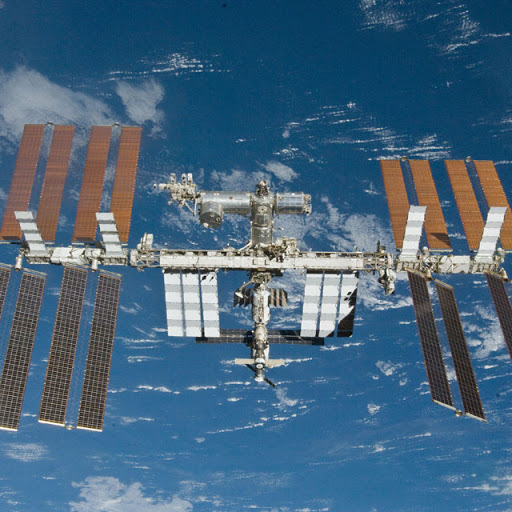
NASA needs Roscosmos’ presence on the ISS. The Russians effectively own one half of the space station. They also provide vital services to the other half. But the ISS will not be in the service of national space programs much longer. The U.S. wants to extend the mission of the aging space station out to 2030 before turning it over to private operators.
After 2030, NASA intents to shift its attention to a new space station called the Lunar Gateway. This station would fly around the moon in a wide orbit that would allow it to provide support for a new generation of lunar explorers and also function as a staging base for a possible future mission to Mars. NASA is enlisting the usual foreign space agencies to help out with the Lunar Gateway with one possible big exception. It appears that Roscosmos will not be invited to participate.
It is not that NASA would not like to keep working with the Russians, all things being equal. It is one rare area where the U.S. and Russia are not rivals. Bill Nelson is the current NASA administrator. He said, “We are partners in space, and I don’t want that to cease.”
However, the sad situation at the Russian space agency and Rogozin’s refusal to admit that there are problems and fix them, might force Nelson’s hand. Logsdon said, “Going forward the stresses in the partnership suggest that it will not last in coming years.”
Even if the Russians do join the Lunar Gateway project, they will not occupy half of the station as they do on the ISS. Burbach said, “If Russian hardware isn’t reliable, or even safe, that probably reduces their leverage.”
It is not simply that the U.S.-Russian relationship is fraying as Russia moves deeper into authoritarianism, invades its neighbors and interferes in foreign election. For the U.S., breaking up with Russia in space missions is also a matter of safety. -
Russians Having Problems In Space – Part 3 of 4 Parts
Part 3 of 4 Parts
One year later, Roscosmos completed its investigation of the hole in the hull of the Soyuz capsule. However, the Russians refused to say publicly what they had discovered. Rogozin at Roscosmos told a science conference that “We know exactly what happened, but we will not tell you anything.”
While the investigation of the first leak took place, NASA and Roscosmos found another slow air leak aboard the ISS. Efforts by the ISS crew in late 2020 narrowed down the leak to one of two Russian-made modules. When taken together, these recent problems at the ISS indicate a faltering Russian space presence.
Experts say that when properly assembled and operated, a Soyuz spacecraft might be the safest spacecraft ever flown. However, it is not difficult to conclude that Roscosmos can’t be trusted to build and operate the cone-shaped craft any more.
With respect to the newer Russian hardware such as Nauka, it is often badly designed, badly built and badly run. John Logsdon is a professor emeritus at George Washington University’s Space Policy Institute He said, “The pattern of poor quality control in new hardware in the Russian space program has been around for many years.”
To be honest, space travel is difficult and risky. NASA has learned this lesson all too well. The U.S. Space Shuttle, which was commissioned by NASA in 2011, was the most dangerous spacecraft ever launched. The bulky and fragile space plane’s two fatal crashed in 1986 and 2003 account for fourteen of the nineteen fatalities that have occurred during space missions since 1961. The world’s space agencies are eager to avoid adding more fatalities to this grim number. This helps to explain why relations between NASA and Roscosmos are deteriorating.
The Russians used to enjoy a reputation for building old fashion but rugged and safe spacecraft. Today, their technology is still old-fashion. For example, the Soyuz capsule design has been in use since 1966 but a lot of Russian space technology is looking less and less safe.
Pavel Luzin is an independent expert on the Russian military and space program. He has a theory that “There is a huge problem with human capital. Most people who worked during the Soviet and early post-Soviet times and knew how the Soviet technologies really worked—with all their pitfalls—are retired.”
He added that “The new generations of engineers and workers suffer from the personnel turnover. Young professionals prefer not to stay too long within the Russian space industry because of over-regulation and lack of salaries. Even if they work according to all the instructions, they just don’t know the pitfalls.”
A lack of money is a toxic threat weaving through Roscosmos difficulties. For a decade between the retirement of the U.S. Space Shuttle and the introduction of new U.S. space capsules, Roscosmos earned billions of dollars renting rides to the ISS on its Soyuz capsules. The importance of those rentals compensated for the Russian space program’s funding problems. Chris Impey is a University of Arizona astronomer. He said, “Since the fall of the Soviet Union, the Russian space program has been chronically underfunded.”
Please read Part 4 next -
Russians Having Problems In Space – Part 2 of 4 Parts
Part 2 of 4 Parts
A few hours after docking last week, the Nauka module abruptly fired its maneuvering rockets totally on its own. The misfiring set the three hundred- and fifty-six-foot space station spinning around its axis, two hundred and fifty miles above the Earth. NASA controllers on the ground in Houston, TX were unable to halt the spin. Only Russian controllers had any access to the remote controls of the Nauka module.
The radio link to the ISS and its modules requires a direct line of sight. A half hour had to pass before the orbit of the ISS took it over Russa and the controllers at Roscosmos could turn off the misfiring thrusters.
At first, NASA announced that the ISS spun just forty-five degrees before the Russians gained control. NASA admitted that it was wrong five days later. The ISS is festooned with modules, solar panels and heat venting radiators. Instead of forty-five degrees, the thin-skinned space station rotated five hundred and forty degrees or one and one quarter turns.
In order to restore the station to its normal orientation, NASA turned on its thrusters for another half-turn. NASA then tweeted, “Station is in good shape and operating normally.” NASA told Space.com that the ISS crew was never in any danger. Scoville tweeted that he had never “been so happy to see all solar arrays and radiators still attached.” It may very well be that the ISS was in no danger of disintegrating. However, NASA and Roscosmos are very lucky that the station did not suffer extensive and expensive damage to vital systems. Roscosmos was asked for a comment but they had nothing to say. Worse, the July thruster problem is just the most recent indication of Roscosmos incompetence.
Back in August of 2018, a Russian Soyuz capsule being used to shuttle people and supplies to the ISS must have escaped the attention of Roscosmos quality-controls. It arrived at the ISS with a two-millimeter hole in its hull. Once the Soyuz docked with the ISS, it began sharing the ISS atmosphere and slowly started venting the atmosphere into space. Controllers in Houston and Moscow eventually detected the drop in air pressure and sent the station crew in search of the leak. The crew found the hole, patched it and sent the Soyuz module back to Earth.
Inspection of the returned capsule reveals some troubling details. Dmitry Rogozin is the controversial head of Roscosmos space agency. He said on Russian television that “There were several attempts at drilling. What is this: a production defect or some premeditated actions?”
Two months later, a different Soyuz capsule was involved in another close call. The capsule was launched on a trip to the ISS with an American and a Russia onboard. A sensor malfunction on the rocket which caused the rocket to fail. The capsule containing the passengers ejected at an altitude of thirty-one miles and parachuted safely back down to Kazakhstan.
Please read Part 3 next -

Russians Having Problems In Space – Part 1 of 4 Parts
Part 1 of 4 Parts
There is growing concern in the space industry that Russia, a one-time leader in space, is becoming a liability for the countries and companies that it has been working with. This is especially true on the International Space Station. In the last three years, there has been a module with a hole in the hull, a rocket that failed thirty-one miles above the Earth and an orbital lab that misfired its thrusters. This is just a short list of the most serious problems involving the ISS. The common element to these problems is that they all involve Russian spacecraft traveling to, or already attached to the ISS, or station modules that have recently arrived from Earth.
Sixty years ago, the Soviet Union was the indisputable leader in space. The USSR sent out the first space probes, the most ingenious manned spacecraft and the luckiest “cosmonauts”. The Soviet Union fell in 1991 and Russia inherited most of the old Soviet space infrastructure including what became the current Roscomos space agency. Moscow has been struggling to maintain what it inherited ever since. Far from being a leader in space, Russia is becoming a liability according to some experts.
This situation has serious implications not just for an increasingly isolated, militaristic Russia, but also for all the countries and companies that work with Russia in Earth orbit, especially on the ISS. The U.S., for one, might separate itself from Roscosmos as it organizes ambitious new manned missions to the Moon and maybe to Mars.
David Burbach is a space expert at the U.S. Naval War College in Rhode Island. He said that the Russians “have a worse record than any other major space power. China landed a rover on Mars on its first try, while every Russian attempt to reach Mars since 1990 has failed.”
With every year that passes, NASA has more options for productive and safe space partnership as the human exploration of space advances. With every passing year, it has less need and less trust for Roscosmos. Burbach said, “The competition has become much stronger—SpaceX, but also other Western firms and China’s improving rockets—and Russia seems likely to keep losing market share if it can’t improve its product.”
The ISS currently houses a crew of seven which includes three from the U.S., two from Russia and one each from the European and Japanese space agencies. The NASA astronauts command the ISS and conduct science experiments. The visiting European and Japanese astronauts are scientists. Roscosmos sends skilled cosmonauts to maintain the hardware on the station. There are two separate “neighborhoods” on the ISS. One for the Russians and the other for everyone else.
The most recent Russian mishap in space was also the most dramatic. On July 29th, a Russian Proton rocket was launched from Taikonur spaceport in Kazakhstan with a new science lab module attached to its top. The long overdue Nauka lab docked safely with the ISS. Hours passed and everything seemed fine on the space station.
Please read Part 2 next -

Continuing Problems With Docking The New Russian Module At The ISS
Last week, I wrote about a problem with the launch of a Russian module to the International Space Station. They had engine/computer problems, but they managed to solve them and successfully rendezvoused with the ISS. Three hours after docking the new module suddenly fired its thrusters and sent the entire ISS spinning off course.
According to NASA, the mission flight director immediately declared a spaceflight emergency while engineers on the ground struggled to regain the stability of the ISS. Attitude control of the ISS was lost for forty-five minutes as ground based flight teams fired thrusters on another module of the ISS and on a separate cargo module that has previously docked at the station. These measures were necessary in order to restore proper alignment to the ISS. During that time, the ISS slowly tumbled end over end at a rate of about half a degree per second. This amounts to about four rotations per hour. Communication with the crew of the ISS was lost twice for several minutes.
Vladimir Solovyov is a designer general at the Russian space company Energia. He said, “Due to a short-term software failure, a direct command was mistakenly implemented to turn on the module’s engines for withdrawal, which led to some modification of the orientation of the complex as a whole.”
“The crew is now busy balancing the pressure in the Nauka module. In the afternoon, the crew will open the hatches, enter the module, turn on the necessary means of purifying the atmosphere and begin normal regular work.”
Dmitry Rogozin is the head of the Russian space agency Roscosmos. He was quoted on the Komsomolskaya Pravda website as saying, “Everything was going well but there was a human factor. There was some euphoria, everybody got relaxed.”
Once again, Roscosmos said that a software glitch was the cause of the unexpected thruster firing. Roscosmos does not seem to be particularly concerned and is sending out messages of reassurance that everything is fine at the ISS which is obviously not true.
Cosmonaut Oleg Novitskiy tweeted early Friday morning, “Dear friends, I’m reading your numerous comments. Don’t worry! Our work at the International Space Station to integrate the newly arrived Nauka module continues! Tonight we are going to open the hatches. Will keep you posted!”
NASA did confirm that the crew of the ISS was safe shortly after they managed to stop the ISS from spinning and put it back on course. Experts are not convinced by the cheerful response of Roscosmos to the near disaster. They are not certain that things were as under control as the Russian space agency claimed.
Jonathan McDowell is a Harvard astronomer. He tweeted, “’The crew were never in any danger’… I’m not convinced they understand the issue well enough to be able to say that right now.
Regardless the actual situation, Roscosmos says that the Russian astronauts attended to the restoration of business as usual on the ISS which includes integrating the new Nauka module. -

Computer Problems Plague Launch Of Russian ISS Module
Russia launched its Nauka module into orbit yesterday to rendezvous with the International Space Station. Unfortunately, a computer glitch prevented it from firing its main engines. When Nauka was unable to execute its first orbit-raising burn, there were concerns that the mission would fail. The Nauka team on Earth was able to perform a course correction and the module is now in the proper orbit to reach the ISS.
The Nauka module, which is formally known as the Russian Multipurpose Laboratory, has been in development since the late 1990s. It was supposed to launch in 2007 but an array of technical problems such as dirty fuel tanks and aging components pushed back the schedule. Two components intended for the module, the airlock and a radiator, were launched to the ISS eleven years ago where they have been sitting in storage waiting for the arrival of the Nauka module.
Yesterday, the Nauka module and a new European robotic arm were launched from the Baikonur in Kazakhstan on a Proton-M rocket. The launch proceeded as expected with the forty-three-thousand-pound module attaining orbit and executing all three separation states. The module is expected to rendezvous with the ISS on July 29th. It will dock with the nadir port of the Russian Zvezda module.
Earlier today, there were fears that the mission might be in jeopardy because a problem with the onboard computer prevented the use of its main engines which were needed to boost the module to higher orbits. Nauka needed those engines to make course corrections that will bring it to the ISS and prevent it from falling back into the Earth’s atmosphere. At 3:10 PM, EDT on the 22nd of July, Roscomos tweeted that the test-firing of the main engines and the orbit correction burn were nominal.
The Pirs Docking Compartment is currently occupying the docking slot which will receive the Nauka. The Pirs was scheduled to be moved on Friday, July 23rd but that was postponed until July 24th at 8 PM EDT. Pirs will only be moved if and when it was confirmed that Nauka was confirmed as being enroute to the ISS.
Jonathan McDowell is an astrophysicist at the Harvard-Smithsonian Center for Astrophysics, He said, “a software error caused a problem in the main engines,” making them unusable for a while. The initial burn, he said, would have to be made with “smaller backup engines.”
The problem with the main thrusters is not the only issue confronting the mission. SpaceNews reported that those problems included “the inability to confirm that an antenna and docking target deployed as expected, as well as issues with infrared sensors and thrusters.” It is not “immediately clear how serious the problems were and if they would affect plans for docking.”
Any difficulties that would prevent the Nauka module from successfully docking with the ISS would be a major blow to the Russian space station program which has been struggling with aging infrastructure and U.S. sanctions directed at its space industry.