I live in Seattle, Washington. While this blog is not restricted geographically, I am especially sensitive to space industry news that involves Boeing, a major local industry. Today, I am writing about Boeing’s participation in a Defense Advanced Research Projects Agency for a reusable spaceplane.
DARPA is an agency of the United States Department of Defense responsible for the development of emerging technologies for use by the military. It was created by President Eisenhower in response to the launch of Sputnik 1 by the Soviet Union in 1957. By collaborating with academic, industry, and government partners, DARPA formulates and executes research and development projects to expand the frontiers of technology and science, often beyond immediate U.S. military requirements.
The DARPA Experimental Spaceplane program is dedicated to constructing and flying the first prototype of a new class of hypersonic aircraft to increase U.S. national security. The purpose of this new class of aircraft is to provide short notice, low cost access to space.
DARPA envisions a fully reusable unmanned vehicle about the size of a business jet. It would launch vertically and reach hypersonic speeds. After reaching a high suborbital altitude, the launch vehicle would release an expendable upper stage that could deploy a three thousand pound satellite to polar orbit. The first stage would return to Earth and land horizontally like a regular aircraft. It would then be prepared for a new mission within hours. The ES was intended to be able to carry out ten missions in ten days.
DARPA’s ES program was announced late in 2013. By July of 2014, DARPA had selected three pairs of companies to design a demonstration vehicle in Phase 1 of the project. The companies were Boeing and Blue Origin, Masten Space system with XCOR Aerospace, and Northrop Grumman with Virgin Galactic. In 2017, Boeing was selected to carry out Phase 2 to develop and construct the vehicle and Phase 3 to carry out fifteen missions in 2020.
In January of 2020, a DARPA spokesman told SpaceNews that Boeing had notified DARPA that it had decided to leave the ES program immediately. DARPA did not make any comment about why Boeing was leaving the ES program. A Boeing spokesman said, “Following a detailed review, Boeing is ending our role in the Experimental Spaceplane program immediately. We will now redirect our investment from XSP to other Boeing programs that span the sea, air and space domains.”
DARPA has struggled to develop a reusable spaceplane for decades but has not succeeded in completing any of the programs that it has launched for this goal. Recently, DARPA has decided not to fund research and development of spaceplanes with specified features and capabilities. Instead, DARPA has shifted to promoting industry innovation for “responsive launch” vehicles.
The DARPA Launch Challenge was announced in 2018. This program offers a prize of ten million dollars to any company that is able to perform two launches of a small launch vehicle from two different sites on short notice. DARPA announced that three competitors had been selected as of April of 2019. To date, two of the competitors have dropped out of the program. DARPA will proceed with the final remaining company. DARPA hopes to be able to proceed with a test in February of this year.
Category: Uncategorized
-

Boeing Drops Out Of DARPA Project To Create Reusable Spaceplane
-

Japan and China Are Working On Systems To Remove Orbital Debris With Lasers – Part 2 of 2 Parts
Part 2 of 2 Parts
The project to test this concept of combining EUSO and a CAN laser for space debris removal would deploy a small proof-of-concept system on the ISS. This would include a small version of the EUSO and a prototype ten-watt CAN laser that could fire at one hundred pulses per second. If the prototype system and full-scale version of this system prove successful on the ISS, then dedicated satellites bcontaining the EUSO and CAN laser can be constructed. Such satellites would travel in an orbit that would take them over both poles of the Earth. The CAN lasers on such satellites would have five hundred thousand watts of power and would fire at fifty thousand pulses per second. Estimates suggest that it could blast one piece of space junk every five minutes. This would add up to one hundred thousand pieces of space debris each year.
Most pieces of space debris occupy an orbit about five hundred miles above the Earth. A dedicated space junk removal laser equipped satellite would start in a six hundred- and twenty-miles orbit and spiral down at the rate of six miles each months. After about four years, the satellite would have removed a great deal of the most problematic space junk that was orbiting between three hundred miles above the Earth to six hundred and twenty miles.
Toshikazu Ebisuzaki is an astrophysicist and chief scientist at the RIKEN Computational Astrophysics Laboratory in Wako, Japan. He is working on the EUSO project. He said, “We may finally have a way to stop the headache of rapidly growing space debris that endangers space activities. The biggest obstacle is funding. There are some technical challenges, of course, but the main issue is getting funding for development and launch.”
A new paper has just been published in Optik – International Journal for Light and Electron Optics from the Air Force Engineering University in China that suggests that lasers mounted on satellites could blast the tiny pieces of debris out of orbit. The key piece of the research for this project was the running of multiple computer simulations of how radiation pressure from lasers could affect the orbital path of the tiny debris. The basic idea is to move the debris to lower orbits that would result in burn-up as it enters the atmosphere. This would occur if the debris could be lowered to about one hundred and twenty miles above the surface of the Earth.
There is an orbital measurement called inclination. This measurement describes the angle between the plane of an orbit and the plane of the equator of the Earth. Another orbital measurement is called the right ascension of ascending node. This measurement describes the angle between the constellation Aries and a satellite as it crosses above the equator travelling from the Southern hemisphere to the Northern hemisphere. The computer models indicated that the best results for removal of small-scale of debris from orbit are obtained when the RAAN of the satellite laser station has the same RANN of the debris.
It is appropriate that China be at the forefront of orbital debris removal because China is one of the worst offenders when it comes to the creation of orbital junk. The most severe fragmentation of space junk in the history of space missions was caused by a Chinese anti-satellite missile test. That test strewed thousands of new pieces of junk into low Earth orbit. It is possible that a piece of this new debris damaged a Russian spacecraft in 2013.
-
Japan and China Are Working On Systems To Remove Orbital Debris With Lasers – Part 1 of 2 Parts
Part 1 of 2 Parts
I have written a number of posts about the amount of junk in orbit around the Earth and various ideas about how to deal with it. NASA estimates that there are almost three thousand tons of space debris in low Earth orbit. More than half a million pieces of junk are up there including over twenty thousand pieces that are bigger than a baseball. Sizes range from flakes of paint to whole inoperable satellites and used launch vehicles.
The problem of orbital debris is getting worse with every launch. Large pieces of space junk can fragment into a cloud of smaller pieces if they are hit by another piece of junk. Those pieces can hit other space junk in turn creating a cascade of new debris.
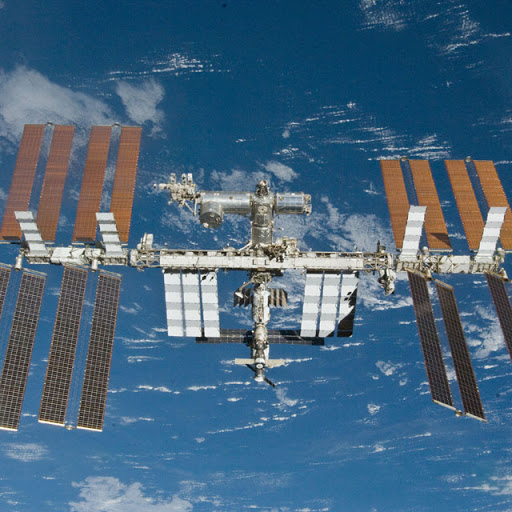
Obviously, the big pieces are a major threat to existing satellites and new launches but even a fleck of paint traveling at twenty-eight thousand miles per hour can damage operational satellites. Windows in the International Space Station have had to be replaced because they were damaged by flecks of paint.
More and more orbital debris is being added every year and new ways must be developed and implemented to remove it or we may be blocked from launching spacecraft because of the junk in orbit. Some of the technologies suggested for removing junk from orbit include magnets, robotic systems with arms to grab junk, giant harpoons to spear junk, giant nets to catch debris and other ideas. Some of these ideas are being tested but they can only be used for removing big pieces of junk. Dealing with all the little bits of debris smaller than two inches is a more complicated question.
In 2015, scientists in Japan suggested adding a space junk blasting laser to the Japanese Extreme Universe Space Observatory module currently operating on the ISS. The EUSO was developed so that ultraviolet light produced by ultrahigh-energy cosmic rays which enter the atmosphere at night could be detected. It turns out that the wide field of view and powerful optical components of the EUSO could also allow detection of high-speed debris approaching the ISS. Once such debris is detected, then a laser could be used to vaporize the smaller pieces and push the larger pieces out of orbit.
The Japanese are developing a coherent amplification network laser for use on the ISS. This involves combining many small lasers into a single powerful beam. This beam could be used to vaporize thin layers off of the surface of any orbital debris hit by the beam. This would push the larger pieces of debris down into lower orbits where it would eventually be burned up by entry into the atmosphere.
A full-scale version of the Japanese CAN laser would have a one hundred-thousand-watt ultraviolet CAN laser that would be able to fire ten thousand pulses per second. Each pulse would last of one tenth of one-billionth of a second. Such a laser would have a range of about sixty miles. This laser would require about seventeen pounds of lithium-ion batteries.
Please read Part 2
-

The Chinese Are Working On Space-based Solar Power
Human civilization requires a great deal of energy to continue to operate and expand. Fossil fuels are going to be retired to help mitigate climate change. Nuclear power plants are popular in a few countries, but many existing power plants are being shut down as the industrialized West turns away from nuclear power. There is a remote possibility that a working nuclear fusion power plant may be developed which would solve some of the problems of fission nuclear power plants. The goal for many nations is to be able to generate sufficient power from renewables such as wind, solar, dams and geothermal plants to be able to turn off all fossil fuels and nuclear power plants.
The idea of putting solar panels in space and beaming the energy back to Earth has been discussed for decades but we are just now reaching the level of technology that would be required to carry out such a project.
China has announced plans for the construction of a two-hundred-ton megawatt level space based solar power station by 2035. The station would capture the sun’s energy that does not reach the Earth. Wang Li is a CAST research fellow. He presented the plan that the Sixth China-Russia Engineering Forum that was held last week in Xiamen in China’s Fujian Province.
The energy captured by the solar panels in space will be converted to microwaves or visible light and beamed back to receivers on Earth. Wang said, “We hope to strengthen international cooperation and make scientific and technological breakthroughs so that humankind can achieve the dream of limitless clean energy at an early date.”
When compared to traditional fossil fuels, which are being exhausted and cause severe damage to public health and the environment, space-based solar power is much more efficient and sustainable. It could provide a very reliable power supply for satellites, areas which have lost their grid due to natural disasters or war, and isolated areas that have no grid.
The idea of collecting solar power in space was first written about by well-known science fiction writer Isaac Asimov in 1941. In 1968, Peter Glaser, an American aerospace engineer, wrote the first formal proposal for a space-based solar power system.
China has proposed a variety of systems for collecting sunlight in space for power. They have also made breakthroughs in wireless energy transmission since they first listed space-based solar power as a major research program in 2008. However, their ambition has faced serious challenges with respect to necessary technology. Many solar panels would have to be launched into space and connected. Efficient transmission of megawatts of energy will have to be perfected.
Twenty-eight million dollars have been invested by China to construct a testing base in Bishan, in Chongqing Municipality in southwest China. It will be used for researching high-power wireless energy transmission. They will also be researching the impact of such energy transmission on the environment.
Wang says that research into space based solar power will help innovation in new space industries such as commercial space transportation. -

Major Japanese Companies Planning For The Construction Of A Lunar Base With Robots
All Nippon Airways is Japan’s biggest airline. They are teaming up with the Japan Aerospace Exploration Agency on the formation of Robot X. They believe that their collaboration with will enable them to “break through the inherent barriers of space exploration.” In 2016, JAXA began collaborating with Kajima Corporation, a construction company, and three Japanese universities including Shibaura Institute of Technology, the University of Electro-Communications and Kyoto University to develop a remote construction system. This system would make use of remote-controlled robots to construct a lunar base with little to no human supervision. Three years of research have convinced these collaborators that there is a bright future for the use of robots as construction workers in space.
The use of robots to construct a lunar base will require major resources of time, money, people, research and robot capabilities. ANA and its collaborators believe that using autonomous robots will have enormous implications for the exploration and exploitation of space.
A permanent base on the Moon would make travel to Mars easier. This would give researchers more time to search for life on Mars. More immediately, a lunar base would allow JAXA to carry out more research missions in space. The successful landing of the Hayabusa spacecraft on the Itokawa asteroid several years ago is an excellent example of missions that would be assisted by a lunar base. There were serious complications that challenged the Itokawa mission, but the craft did eventually return to Earth with a sample from the asteroid’s surface. NASA officials described the mission as “beyond remarkable.”
In addition to extending the limits of space exploration, a lunar base will also attract an influx of corporate innovation that will have ramifications for the improvement of society on Earth in general. One original concept from Japan is called the Luna Ring. This is a solar panel concept that would use robots to provide clean power for Earth. The Luna Ring was developed by the Shimizu Corporation. The project calls for the use of an army of robot workers, teleoperated from Earth, to construct a huge ring of solar panels along the seven-thousand-mile equator of the Moon. There would be a team of astronauts on the Moon to monitor and assist the robot workers.
It is obvious that it will be a very complex project to build a lunar base that can be a livable habitat for human astronauts. The collaborators have divided their lunar base project into four phases.
Phase one would involve the preparation of the chosen site for human habitation. During Phase Two, the site would have to be excavated to ensure that the base would be constructed at the required depth. In Phase Three, after excavation, the robots would begin installing the habitation module and making it safe against threats from the Moon and the space around it. One big concern will be meteoroids that travel through space at such high speeds that if such a space rock hit the habitation module, it could cause a leak of oxygen. The Fourth and final Phase would consist of covering the entire habitat module with moon dust called regolith. This shield will serve not only to protect the habitat from damage but will also protect the human inhabitants from the severe levels of radiation from the Sun as well as cosmic rays from beyond the Solar System.
Thorough testing is a critical foundational element for any technological development. At the end of three years of comprehensive research for the lunar base project, the collaboration recently carried out an experiment. A seven-ton autonomous backhoe was operated on the testing grounds. The experiment was executed at the Kajima Seisho Experiment Site in Odawara, Japan. It involved procedures such as driving a specified distance and repeating routine operations.
Besides testing full automation capability, the experiment also included establishing remote construction functionality, just in case there were task that were too complicated to be carried out by autonomous robots. The results of the experiment gave the collaborators confidence that it will be possible to construct a permanent habitable lunar base with the use of construction robots. A JAXA official said that “The operational process has shown the feasibility of the unmanned technologies to build a lunar base.”
In spite of the optimism of the team of collaborators, this project is a huge undertaking which will require a great deal money and manpower. In order to make these huge investments pay off, Japanese innovators will need to develop some breakthrough innovations that will have a long ranging societal impact. ANA believes that this is the only way to advance humankind. -

Chinese Researchers Develop Improved Method Of Detecting And Tracking Orbital Debris
One major problem confronting the exploration and exploitation of space is the amount of space junk in orbit around the earth. Old satellites, spent boosters, tools and debris from the International Space Station, and fragments and flakes of paint and metal from collisions between pieces of orbital junk make launching missions more dangerous that it once was. There are hundreds of thousands of big pieces that are being tracked by radar and millions of pieces too small to track. Unless something is done to reduce the creation of more orbital junk and a way is found to remove junk from orbit, it may become impossible to launch satellites and spacecraft without significant probability of collisions with space debris.
Researchers at the Chinese Academy of Surveying and Mapping, Beijing and Liaoning Technical University, Fuxin, China have improved the accuracy of detecting and tracking space junk in orbit to help plot safe routes for spacecraft launches and maneuvers.
Scientists have developed systems to identify space junk, but it is difficult if not impossible to track the tiny fast-moving specks of space litter. A report just published in the Journal of Laser Applications describes a unique set of algorithms for laser ranging telescopes that will significantly improve the rate of detecting space debris.
Tianming Ma is one of the team that published the report. He said, “After improving the pointing accuracy of the telescope through a neural network, space debris with a cross sectional area of 1 meter squared and a distance of 1,500 kilometers can be detected.”
Laser ranging technology utilizes laser reflections from objects in order to measure their distance from the telescope. However, the echo signal that is reflected from the surface of a piece of space debris is very weak. This reduces the accuracy of the measurement. Previous methods for measuring the position of space debris have been improving but they are only able to measure positions to one kilometer of accuracy.
Neural networks are modeled on the sensory inputs, processing and output levels of the human brain. It had been previously proposed that neural networks could be used to develop algorithms for accurately measuring the position of space debris. The study by Ma and his team is the first time that a neural network has been used to significantly improve the accuracy of a laser ranging telescope.
Ma and his team trained what is called a back propagation neural network to recognize space debris with two self-correcting algorithms. The Genetic Algorithm and the Levelberg-Marquardt algorithm optimized the thresholds of the neural network for the recognition of space debris. They ensured that the neural network was not too sensitive, and that the telescope could be trained on localized areas of space. Ma’s team demonstrated the improve accuracy provided by their neural network by testing it against three current methods at the Beijing Fangshen laser range telescope station.
Observational data on ninety-five stars was used to solve the algorithm coefficients that each method generated. The accuracy of the methods was checked by detecting twenty-two other stars. The new pointing correction algorithms turned out to be the most accurate. In addition, the new method was easy to operate with good real-time performance. Ma intends to further refine his new method. He said, “Obtaining the precise orbit of space debris can provide effective help for the safe operation of spacecraft in orbit.” -

The Greater Seattle Area Is A Major Center Of Satellite Production – Part 2 of 2 Parts
Part 2 of 2 Parts
The Aerojet Rocketdyne operation in Redmond brags about the fact that it has built thrusters for every single U.S. interplanetary mission. This includes creating the propulsion systems for landing NASA probes on Mars. Ken Young is the general manager for Aerojet Rocketdyne in Redmond. He said “This week we’ll celebrate 20,000 engines produced at our facility. If you think about it, that’s a pretty remarkable number. The path to Mars goes through Redmond.”
The rocket business has changes significantly since the early days when most space activities were carried out by national governments. Young estimates that the proportion of Aerojet Rocketdyne business that is devoted to missions by private space companies has gone from twenty percent to sixty percent in just the last twenty years.
Most activity in the private space sector is dedicated to telecommunications and observation of the Earth. Both of these applications will be expanding rapidly in the near future. Multispectral imaging for Earth observation will facilitate new approaches in fields ranging from firefighting to crop and forest management.
Curt Blake is the CEO and president of Spaceflight, a company based in Seattle. Spaceflight manages launch logistics for operators of small satellites. He said, “Today, you can get an image once a day, basically. What we’re seeing with a lot of our customers are very close to 60- to 90-minute lead times, coming down to 30 or 40 minutes. So if there’s a place over the Earth you need a picture of, you can get it very fast commercially.”
With respect to telecommunications, SpaceX, Amazon and OneWeb are creating mega-constellations of satellites. The demands for populating these constellations of communication satellites will provide business for small-satellite builder for many years.
There are potential problems with the proliferation of satellites in Earth orbit. One big problem that is already the subject of heated debates is the fact that hundred to thousands of new satellites in orbit will interfere with astronomical observations. There is also the possibility of space traffic jams. A Starlink satellite and a European satellite for wind measurement almost collided last September. There is an increasing risk of satellite collisions. Blake said, “There’s no space traffic management system. We just need to have a really good space traffic management system.”
U.S. and European officials are working on the problem of overcrowding in orbit. There may be limited time to develop a global satellite tracking system. Meyers said, “There are going to be collisions, and there will be a lot of debris created … Once orbits have those kinds of problems, we will have to stay out of them, and they won’t be available for operational spacecraft for potentially decades. That’s a really big deal. There are people who feel that the mid-orbit ranges will be unavailable … starting about 10 or 15 years from now. So the problem’s got to be solved.”
Will proliferation of satellites and space junk interfere with our exploration and exploitation of space or will orbital activity come to dominate the twenty first Century? The major players in the Greater Seattle’s satellite industry may play a crucial role in determining the answer. -

The Greater Seattle Area Is A Major Center Of Satellite Production – Part 1 of 2 Parts
Part 1 of 2 Parts
Seattle is too far north to be a good launch site, but it is rapidly becoming a major production site for the manufacture of satellites. Roger Myers is a longtime aerospace executive who is currently president-elect of the Washington State Academy of Sciences. At a Pacific Northwest Economic Region’s Economic Leadership Forum last Monday, he said, “How many of you know that Washington state is actually one of the world’s leading satellite manufacturers?”
Colorado-based Lockheed Martin and Boeing’s satellite operations in California have the lead in satellite production in terms of mass and revenue. However, in terms of the number of satellites launched in the past few years, the SpaceX satellite development and manufacturing facility is very close to its big rivals.
Last week, SpaceX launched another sixty satellites to expand its Starlink broadband constellation. Counting two prototype launches and the launch of the first sixty satellites for Starlink, the total is one hundred and twelve in the past year.
LeoStella has a factory in Tukwila, a community just south of Seattle. Four of their Global satellites are already in orbit as part of the BlackSky’s Earth observation constellation. LeoStella is scheduled to construct another dozen of the Global satellites.
Amazon has plans to construct and launch thousands of satellites for their Project Kuiper broadband mega-constellation. Most of the jobs associated with Project Kuiper are in Bellevue Washington, a city near Seattle.
Part of the reason that Washington State has attracted so much attention from the growing private space industry involves the decreasing cost of the hardware that goes into satellites. Commercial electronics has become steadily smaller, cheaper and more powerful over the past several decades. Meyers said, “What that did is, it reduced the barriers to entry, and it enabled the creation of a much broader sector around the world.”
Software development also has a lot to do with the popularity of Seattle for the space industry. The presence of Microsoft, Amazon and many spin-off businesses in the Greater Seattle area has made the region a global center for data analytics, machine learning, cloud computing and many other technologies that have applications in space industries. That is a major reason why SpaceX located its satellite development center in Redmond, Washington instead of near its home base in Southern California, a preferred location for a lot of private space companies.
Elon Musk is the CEO of SpaceX. When he announced the move of SpaceX satellite development to the Seattle area in 2015, he said, “There’s a huge amount of talent in the Seattle area, and a lot of you guys, it seems, don’t want to move to LA.”
Another major factor in Seattle’s attraction to space industries involves the decades of aerospace activity in the region. Boeing has been building airplanes in the Greater Seattle area for a hundred years. Aerojet Rocketdyne has been doing research into rocket science in Redmond, Washington for fifty years. Aerojet Rocketdyne can trace its origins to the Rocket Research Corporation which was founded by former Boeing engineers in Seattle in 1959 and was moved to Redmond, Washington in 1968.
Please read Part 2 -

Rocket Lab Developed A Robot To Build Their Electron Launch Vehicles
Rocket Lab is a private U.S. aerospace manufacture and smallsat launch service provider. It has a wholly owned New Zealand subsidiary. It developed a suborbital sounding rocket called Atea. It currently operates a lightweight two-stage orbital launch vehicle called the Electron. The Electron provides launch services for CubeSats and smallsats from a launch facility on the Mahia Peninsula in New Zealand.
Rocket Lab has developed a new rocket-building robot system that is designed to accelerate manufacturing of Electron launch vehicles. In November of 2018, Rocket Lab added the new custom-designed robotic system called “Rosie” to the company’s manufacturing line. Utilizing the new Rosie robot, Rocket Lab can produce the carbon-composite components of the Electron launch vehicle in twelve hours. Previously, it required over four hundred hours to produce an Electron.
Peter Beck is the Founder and CEO of Rocket Labs. The company produced a video in which Beck said, ”What this machine does is it takes every single carbon-composite component of the launch vehicle and processes it to move on to the next stage of production. That includes every bit of marking, every bit of machining, every bit of drilling.”
The Rosie robot system occupies over fifteen hundred square feet. A bus could be parked inside the robot. There is sufficient room to process the entire two-stage Electron launch vehicle. Payload fairings are also produced by the robot.
Before the development and deployment of the Rosie robot system, Rocket Lab was able to produce an electron launch vehicle every thirty days. Now, with the use of the Rosie robot system, Rocket Lab is much closer to its ultimate goal of being able to build one Electron every week.
Beck said in the company video, “What Rosie really means for Rocket Lab and [its] launch frequency is we are able to process launch vehicles so much faster. We can produce one launch vehicle in this machine every 12 hours.”
In addition to the use of Rosie to create the Electron components, Rocket Lab also uses 3-D printing to produce the components for the engines in its launch vehicles. They are now developing a reusable first stage for the Electron launch vehicle. Rocket Lab has conducted tests of a more powerful booster that will assist them in recovering the first stage. They intend to use helicopters to snag the falling first stages following launch. These new processes and technology have been developed to reduce the production time for launch vehicles. They are also intended to facilitate high-frequency launch capabilities.
Rocket Lab has recently built a new range control facility at the New Zealand launch site. This will help them streamline mission operations. The company is also completing construction of a second launch site that will be called Launch Complex 2. The new Launch Complex is located on Wallops Island off the coast of Virginia. Rocket Lab intends to launch its first Electron rocket from the new facility some time in 2020.
Rocket Lab is a comparatively small company in the international space industry, but they are moving ahead rapidly with their new technologies. -

China Proposes A Earth-Moon Economic Zone – Part 2 of 2 Parts
Part 2 of 2 Parts
Generally speaking, the major issues that will be challenges for any grand space program will involve the costs and technological capabilities. Currently, it is very expensive to launch a payload. It costs about ten thousand dollars to put a pound in orbit. This cost has got to be reduced significantly. Another issue is the development of reusable space launch vehicles. There are still important challenges that exist for cost-effective satellite launches to low, medium and geosynchronous orbits. It is proving to be a challenge just to maintain the International Space Station for a few decades. The distance to the Moon is about a thousand times the distance from the Earth to the ISS. China has suggested a very ambition space program.
The Chinese space program began in the 1950s and by 1970, Chinese was considered a spacefaring nation. In 2000, 2006, 20011 and 2016, China produced white papers that outlined their current and future plans for space exploration and exploitation. These white papers state that China has three main areas of interest in terms of space exploration. Space-based navigation, space stations and interplanetary missions.
The Chinese BeiDou space navigation system demonstrates that China does have the ability to plan and carry out major space projects. China also has a robust manned space program. It plans to launch its own space station by the early 2020s. China has been carrying out lunar missions since 2007. From 2013 on, they have had lunar lander and rover missions. They have been having some problems with their work on a heavy lift launch vehicle.
Russia is known to have assisted China with their space program but now China is making significant technical progress with their domestic space programs. They are making major financial investments in their space initiatives. In addition to government space projects, Chinese private space industry is making major progress. There are more than a hundred Chinese companies participating in space projects. China has done very well in the development of their space sector in a short period of time.
Geopolitically, China has made significant progress in recent decades. Today, China is the second largest economy in the world. Its presence is being felt in economic, political, strategic and diplomatic sectors around the world. China is also involved in a variety of conflicts. They have disputes with several nations in the South China Sea. China refuses to recognize the authority of the tribunal created by the United Nations Convention on the Law of the Sea. It is obvious that China wants to dominate the ocean travel lanes where a lot of international trade moves. They are also interested in controlling the oil economy in southeast Asia.
China has built artificial islands in the South China Sea to provide space for major infrastructure development including military installations. The Belt and Road initiative is a huge Chinese project to provide loans for funding major infrastructure development across Asia, the Middle East and Africa.
It is important to consider these geopolitical ambitions of China when discussing their proposal for an Earth-Moon economic zone. It is possible that China is the only country in the world with the ambition, drive and technical capability to propose and carry out such a project. The U.S. may have the money and the technology but apparently does not have the ambition for such a huge project.
One very serious issue about this Chinese project is that if they proceed and make significant progress, that will position them to dictate a lot of the framework for future international economic cooperation in space exploration and exploitation. It is clear that China wants to dominate humanity’s expansion into space.