Part 2 of 3 Parts
Atwater, Hajimiri, and Pelligrino discussed their project as it nears a significant milestone. A test launch of prototypes into Earth orbit is expected in December of 2022.
Sergio Pellegrino said, “It was more than 10 years ago, in 2011, that conversations began with Donald Bren asking whether Caltech had any ideas when it came to research in the field of sustainable energy and space. We started discussing, in a group of faculty members, ways of building on our interests and what was happening in each of our areas that might lead to a very impactful research initiative. Over a period of a few months, we came up with a vision—I called it a dream—of three or four technology breakthroughs that, in combination, would transform the way space solar power had been previously approached.”
Ali Hajimiri added, “This concept was, in the past, truly science fiction. What made it possible for us to consider taking it from the realm of science fiction to the realm of reality was the combination of developments happening in photovoltaics in Harry’s lab, in structures in Sergio’s lab, and in wireless power transfer, which is happening in my lab. We realized that we can now pursue space solar power in a way that is becoming both practical and economical. One of the first questions that anyone asks is, “Why do you want to put photovoltaics in space?” Well, in space, where you don’t have day and night and clouds and things of that sort, you get about eight times more energy. The vision of this program is to be able to provide as much power as you need, where you need it, and when you need it.”
On the question of actual concrete progress to realize their vision, Pellgrino said, “Over a period of two years, we built and demonstrated a prototype tile. This is the key modular element that captures the sunlight and transmits the power. Through that process, we learned many things about how to design highly integrated and ultralight systems of this sort. We then developed a second prototype, 33 percent lighter than the first.”
Hahimiri added that, “This tile is the building block, as Sergio mentioned, of the larger system. It has to be fully functional, compatible, and scalable. Although it may sound simple, it’s actually quite sophisticated. These tiles are mounted on a very flexible structure that can be folded to fit in a launch vehicle. Once deployed, the structure expands, and the tiles work in concert and in synchronization to generate energy, convert it, and transfer it exactly where you need it and nowhere else.”
When asked about the next phase of the project, Atwater said that “It doesn’t get real until you actually go to space. As Sergio and Ali described, we demonstrated this key unit element called a tile in our labs. One of the lessons from that series of demonstrations was that the pathway we needed to follow for photovoltaics fundamentally had to change. We were working with what I’ll call conventional photovoltaic materials, which had to be designed in a form that was going to make it difficult to reach the mass-per-unit area and specific power goals, so we had to basically rethink the photovoltaic strategy completely. As a result, the classes of photovoltaic devices that we are testing in space have actually never flown in space before.”
Please read Part 3 next
Author: admin
-

Caltech Researchers Working On Beaming Solar Energy To Earth – Part 2 of 3 Parts
-

Caltech Researchers Working On Beaming Solar Energy To Earth – Part 1 of 3 Parts
Part 1 of 3 Parts
Collecting solar energy in space and beaming it back to Earth has been discussed in science fiction novels and movies for decades. Serious engineering studies have taken place to specify what technologies would be necessary to accomplish such solar energy beaming. If it can be shown to be technically feasible, it would provide a global supply of clean and affordable energy. Now it seems that solar energy beaming is moving from the realm of science fiction to science fact.
Through the Space-based Solar Power Project, a team of California Institute of Technology researchers is working to deploy a constellation of modular spacecraft. These satellites will collect sunlight, transform it into electricity and then wirelessly transmit that electricity to wherever it is needed on Earth. They could send electricity to remote locations which currently have no access to reliable energy.
Harry Atwater is an SSPP researcher and Otis Booth Leadership Chair of Caltech’s Division of Engineering and Applied Science. He said, “This is an extraordinary and unprecedented project. It exemplifies the boldness and ambition needed to address one of the most significant challenges of our time, providing clean and affordable energy to the world.”
Atwater is also the Howard Hughes Professor of Applied Physics and Materials Science. He leads the project jointly with two other researchers. One other leader is Ali Hajimiri, Bren Professor of Electrical Engineering and co-director of SSPP. The other leader is Sergio Pellegrino who is Joyce and Kent Kresa Professor of Aerospace and Civil Engineering, co-director of SSPP, and a senior research scientist at the Jet Propulsion Laboratory.
In order to harness solar power from space, there must be breakthroughs advances in three main areas.
First, Atwater’s research group is working on the design for ultralight high-efficiency photovoltaics. These new solar cells must be optimized for space conditions and compatible with an integrated power conversion and transmission system.
Second, Hajimiri’s research group is developing the low-cost and lightweight technology required to convert direct current power to radio frequency power such as that used to transmit cell phone signals. Then, the converted power must be beamed to Earth as microwaves. Hajimiri says that the process is safe. The non-ionizing radiation is significantly less harmful that direct sunlight falling on the same area. The system will be able to be turned off if there is damage or malfunction.
Third, Pelligrino’s researchers are working on inventing foldable, ultrathin, and ultralight space structures to support the photovoltaics as well as the components necessary to convert, transmit, and steer radio frequency power to where it can be used on Earth.
The basic unit of the system the researchers are working on consists of a four inch by four inch tile that weighs less than a tenth of an ounce. Hundreds of thousands of these tiles would combine into a flying-carpet like satellite that, once deployed, would create a sunlight-gathering surface that measures three and a half square miles.
Work on the SSPP has been supported by over one hundred million dollars in funding from Donald Bren who is the chairman of the Irvine Company and a life member of the Caltech community. His wife is a Caltech trustee who is also supporting this funding. The Northrup Grumman Corporation provided funding for the initial feasibility studies.
Please read Part 2 next -

India Invests In Private Space Companies – Part 3 of 3 Parts
Part 3 of 3 Parts
Dhruva Space is one of two private space companies authorized by InSpace. They said that they started in 2012 with the goal to privatize space activity in India. Sanjay Nekkanti is the CEO of Dhruva. He said, “The market was not very receptive to space entrepreneurs trying to build a full solution, therefore there was not much access to capital.”
Much of India’s advancement in the space race used to be either in academia or government, Nekkanti added. Dhruva designs space missions and builds space infrastructure for India and International clients. It got a big boost in 2020. In a commercial ecosystem where vendors that replicate and build components for space missions have been thriving for decades, companies like Dhruva now have sufficient capital to build indigenous products and shore up intellectual property. For the next two quarters, Dhruva wants to not just take technological leaps, but they also want to enable global customers to launch their own satellites on their deployers.
Chaitanya Dora Surapureddy is CFO of Dhruva. He said, “India’s new space economy is on the edge of lift-off and I foresee a striking new era of tech investment. In fact, it’s already happening.”
Kumar said that India is still in the process of becoming the go-to place for space technology and manufacturing for the global space market. He said, “While rich countries will be able to leapfrog given the capital and purchasing power, this might not be possible for others, therefore giving a chance to countries like India to supply.” He added that more government funding is needed for space diplomacy and for India to become a bigger player.
The next big thing in India’s business of space is the defense sector. Last year, the Indian Chief of Defense Staff General Bipin Rawat said that space is critical to operations both in peace and war. He added that the privatization of space will be critical for that. This year, Digantara set up India’s first private space situational awareness observatory on the foothill of the Himalayas. This new center monitors satellites in orbit. Sharma said, “This will bring indigenous capabilities to the nation for both military and civilian applications.”
India’s private space empire may have started fifty years after the world’s first Moon landing. However, many in the space industry feel that India’s private companies are not just here to win the space race. Aside from taking India’s dreams to outer space, several space technology companies are working to bridge the gap between space technology and addressing problems that are unique to the Indian subcontinent.
An new Indian company called Numer8 predicts climate change pattern changes to assist fishermen. Vassar Labs in another startup that uses satellite imagery to advise government on climate change’s impact on India’s water resources. Skylo is a third startup that developed agricultural sensors that measure and deploy soil nutrients and water needs in India. Seventy percent of rural households in India depend on agriculture.
Prasad said, “I don’t believe India is in a space race with anyone. India will benefit from the convergence of infrastructure, experience, talent, capital, and the openness of the global market to engage with the country, to build space products to benefit not just businesses and government, but also citizens.” -

India Invests In Private Space Companies – Part 2 of 3 Parts
Part 2 of 3 Parts
The global competition for the exploration and exploitation of space is fierce. NASA has captured the global spotlight. They were the first to put humans on the Moon, send missions to Mars, and carry out other famous space exploits. NASA works closely with private companies like Space-X. It was allocated thirty billion dollars this year by the U.S. government. Russia is a space superpower which has partnered with the U.S. on many space ventures. It has hit a rough patch this year because of the invasion of Ukraine and is functioning with state budget for space of only two and a half billion dollars. China’s space program has a budget this year of thirteen billion dollars from the government and a billion dollars of private space investment.
India’s space budget is about one billion seven hundred million dollars this year. In the current space race, the U.S. has one thousand six hundred and fifty assets in outer space while China has four hundred and fifty. To date, India only has eighty assets.
The geopolitical shifts in recent years have caused experts to be optimistic about the Indian space program. India sets the bar really high in exhibiting and supplying competitive space technology and manufacturing at a fraction of global costs. India’s first Mars mission in 2014 cost India seventy-four million dollars. NASA’s Mars mission was launched the same week. It cost nine times more than the Indian mission.
Kumar, the journalist, said, “Space is unforgiving, with zero margin for error. So while ISRO has been able to build technology and systems that are affordable, they are also reliable systems of good quality.” There is also no lack of skilled workers in India.
A new report from the Indian Space Association and Ernst & Young predicted that India’s space economy is expected to be worth about thirteen billion dollars in 2025. India’s satellite manufacturing sector is expected to be worth about three billion dollars in 2025. This is a huge jump from the half billion dollars in 2020. The “downstream” sector includes ground services. It is expected to worth about four billion dollars the same year.
Narayan Prasad, co-founder of India’s first space think tank, Spaceport Sarabhai, told an interviewer that India is looking at its own “Henry Ford Moment”. This was a reference to the emergence of India as the favorite choice in the global space market. He said, “With China being seen as unreliable collaborators, and Russia’s war impeding global trust, India stands out in a unique place with its space capabilities, ability to do business and the right mix of talent and infrastructure. There’s literally no limit to what can be achieved.”
Prasad added that much of the success of the India’s current private players is based on the work of four generations of their predecessors. This began with legacy companies such as Godrej that have been in the space business for over thirty years. However, many companies were struggling even just a decade back.
Please read Part 3 next -
India Invests In Private Space Companies – Part 1 of 3 Parts
Part 1 of 3 Parts
Anirudh Sharma graduated from engineering college just two years ago. In June of this year, Sharma’s company, Digantara launched the world’s first commercial space-based space weather system. He says that the technology is “kind of like Google Maps for space.”
During June, India’s Prime Minister Narendra Modi mentioned Digantara in his monthly radio show. He said that Digantara is one of India’s cutting-edge space companies that the world should watch. By 2021, the company had raised millions of dollars in seed funding. It is India’s first private company that is prepared to send forty satellites to identify and potentially clean up space junk. Space junk travels at fifteen times the speed of a bullet. It can riddle a spacecraft with holes. It is estimated that the space junk monitoring market is worth about three billion dollars this year.
Sharma gave an interview about starting Digantara along with co-founders Fahul Rawat and Tanveer Ahmed. He said, “Honestly, it’s just great timing, not just as a company focusing in this area, but also as an Indian company.”
India’s space program started in 1969 with the formation of the government’s India Space Research Organization. However, in 2020, Modi announced that the country is going to concentrate its money and efforts into the private space sector. This could lead to India’s own Space-X type ventures.
Sharma says that Indian private space companies are growing faster than Space-X which is valued at over one hundred billion dollars. He added that “Other countries are recognizing that India is going to be huge in space, and it will continue to grow.”
The global space economy is worth almost half a trillion dollars. The U.S. and China are the biggest spenders. India currently accounts for only two percent. However, experts say that the rate of change in the Indian space program will thrust it into the top tier of space exploration. A big part of this change is India’s shift to privatization of space activities.
There have been over one hundred active space startups since 2012. This was reported in the Economic Survey of India. Many of these startups are currently competing to be authorized by the newly created InSpace. InSpace is the Indian Space Promotion and Authorization Center. It is an agency that will serve as a link between ISRO and private space sector companies. Digantara is one of two private companies to have received authorizations so fat.
Chethan Kumar is a Times of India journalist who has been covering the space sector for over a decade. He told an interview that the greatest impact from privatization so far is the independence and financial support given to the private players. ISRO has more than three hundred and fifty partners. This puts India in fifth place globally in terms of strength of private companies in the space sector. However, their role was restricted to building components for ISRO.
Kumar said, “It was only a matter of time for the government to empower private companies in the space sector. I’d even say that this could’ve come a decade ago, given ISRO’s considerable progress in developing indigenous space technology. The time has now come to create newer space tech and on-demand launch services, which will require commercial players’ participation complementing that of ISRO.”
Please read Part 2 next -
Gravitics Is Building Large Modules For Future Space Stations
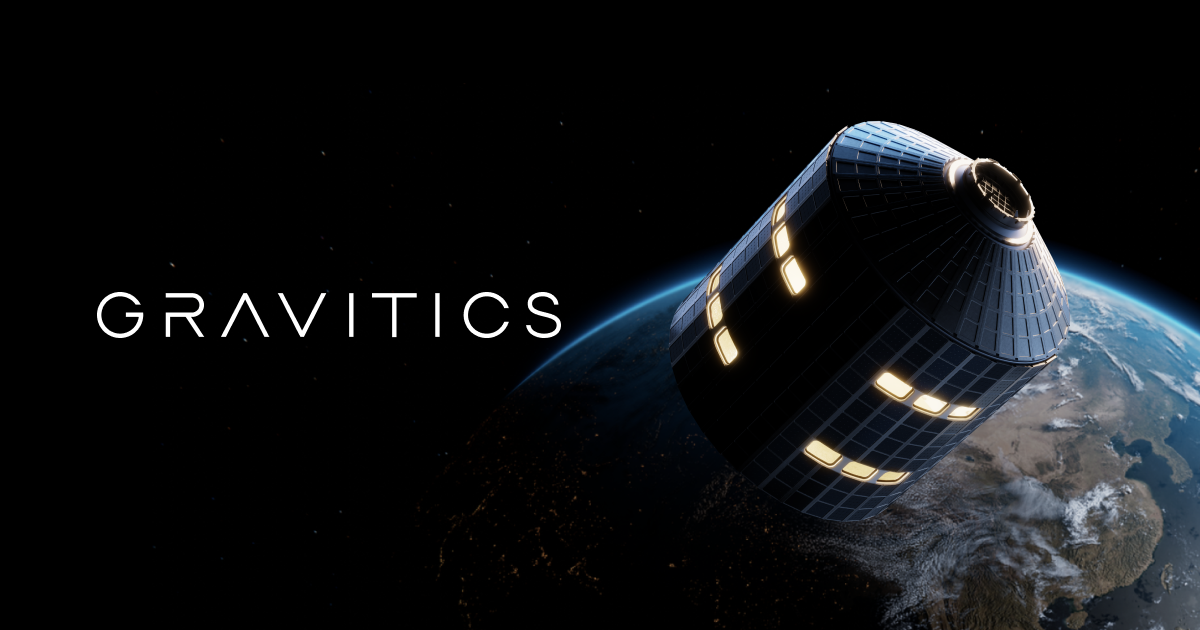
A space venture named Gravitics has emerged from stealth mode with twenty million dollars in seed funding and a plan to build space station modules at a forty-two thousand square foot facility north of Seattle, in Marysville, Washington.
NASA is planning to phase out the International Space Station around 2031. Gravitics and its backers are betting on rush to launch commercial outposts to low Earth orbit. The operators of these orbital outposts will probably need subcontractors to provide the hardware.
Gravitics main product will be a huge module known as StarMax. The general-purpose modules will provide up to fourteen thousand cubic feet of usable volume. This represents almost half of the pressurized volume of the International Space Station. Multiple StarMax modules can be linked together in orbit like Lego blocks.
Colin Doughan is the cofounder of Gravitics and its CEO. He said today in a press release, “StarMax gives our customers scalable volume to accommodate a space station’s growing user base over time. StarMax is the modular building block for a human-centric cislunar economy.”
The investment group for the newly announced seed funding round is led by Type One Ventures and also includes Tim Draper from Draper Associates, FJ Labs, The Venture Collective, Helios Capital, Giant Step Capital, Gaingels, Spectre, Manhattan West and Mana Ventures.
Tarek Waked is with Type One Ventures. He has joined the Gravitics board of directors. He said, “Having scalable space infrastructure that is 100% made in the United States is good for the space industry, good for the country, and is just the beginning of an effort that the whole world will benefit from as space becomes more and more accessible.”
Doughan brings almost two decades of aerospace industry experience to the venture. He was a senior finance manager at Lockheed Martin from 2003 to 2021. He also served as cofounder of Altius Space Machines which was acquired by Voyager Space Holdings in 2019.
Other leading members of the Gravitics team include Bill Tandy. He is a veteran of Ball Aerospace; Jeff Bezos’ Blue Origin space venture; and director of engineering Scott Macklin who was former head of propulsion at Virgin Orbit. Gravitics says that its workforce has grown to nearly forty people. This includes full time employees as well as contractors.
The site of Gravitics forty-two thousand square foot facility will be about forty miles north of Seattle in Marysville, Washington. The company has acquired construction permits and posted job listings for the facility. They say that they have already begun assembling their first StarMax prototype. They are also preparing to conduct module pressure tests in early 2023. The ground-based pressure tests would open the way for an orbital test mission that has yet to be announced. Pre-order are being accepted for module delivery as early as 2026.
Gravitics is likely to face serious challenges as it tries to break into a market alongside major players such as Thales Alenia Space which is manufacturing space station modules for Axiom Space); Sierra Space and Blue Origin which are working on modules for the Orbital Reef space station; Northrop Grumman which is developing its own space station concept; and Lockheed Martin which is part of the team for the Starlab space station project, led by Nanoracks.
In a recent interview, Type One’s Waled said that he expected SpaceX Starship super-rocket to open up new opportunities in the years to come. He added that “We’re betting on Starship revolutionizing the industry.”
Because of its large size, Starship would be the most suitable rocket for launching StarMax modules. However, Gravitics says that the StarMax family of modules could be launched on other rockets as well. Jonathan Goff is the Gravitics’ StarMax production lead. He said in a tweet that the Starship friendly twenty-six-foot wide StarMax “is our primary focus at the moment.”
Gravitics’ executives are already talking with development groups in Florida about building a production and integration facility near NASA’s Kennedy Space Center. It would have a larger footprint than the Marysville facility. -

Russian Researchers Report Possibilities Of Advertising Displays In Orbit
StartRocket is a Russian private space startup. They have been promoting the idea of space advertisements since early 2019. Project leader Vlad Sitnikov said that this commodification of the sky is the next logical step in advertising. He said, “We are ruled by brands and events. The Super Bowl, Coca-Cola, Brexit, the Olympics, Mercedes, FIFA, Supreme, and the Mexican wall. The economy is the blood system of society. Entertainment and advertising are at its heart. We will live in space, and humankind will start delivering its culture to space. The more professional and experienced pioneers will make it better for everyone.”
In a new report, Russian researchers from Skoltech and MIPT have proposed sending satellites into space to display commercials in the night sky. The report was published in the journal Aerospace. It suggests that the advertising plan would be economical at the cost of sixty-five million dollars per mission.
Shamil Biktimirov is a research intern at Skoltech’s Engineering Center and the first author of the new report. He said, “This time we looked at the economic side of things and, as unrealistic as it may seem, we show that space advertising based on 50 or more small satellites flying in formation could be economically viable.” Each satellite could be as big
as a three hundred square foot solar sail, according to Biktimirov.
Initially, the Skoltech team proposed an advertising mission using a formation of miniature satellites called CubeSats. However, the team first needed to determine the appropriate reflector size and calculate mission lifetime and profitability. Biktimirov said, “Rather than trying to determine the reflector size yielding a certain pixel magnitude, we consider the largest reflector that has actually been successfully deployed and operated on a CubeSat. Namely, a 32-square-meter solar sail. For that reflector, we derive the land area it can cover without sacrificing too much apparent light intensity, and this is what we use in further feasibility calculations.”
Biktimirov stated that revenues would certainly depend on a number of factors, such as outdoor advertising costs, population, cloudiness, cold weather, and the city’s demographic composition. The satellites would not be displaying a single ad from a single brand. Instead, the satellites would be rotating through a number of different ads over the next most profitable city within reach. Biktimirov said, “The key concerns are maximizing overall mission duration and a satellite’s footprint area — the scope of where it can reach to project a ‘pixel’ that would be part of the image in the sky.”
In their report, the researchers remarked that because the satellites have to be exposed to sunlight, the missions could only be performed around sunrise or sunset but not at night. Also, the technology would only be economically feasible for bigger cities that are already permanently exposed to light pollution.
While this idea of space advertising might be attractive to major brands, I cannot help but feel that it might not be so attractive to the average person to have brand names and company logos cluttering their view of the stars, planets and Moon. -

Orbital Assembly Announces Plans For Launching A Small Space Hotel By 2050
One of the possible commercial uses for a space station that has been discussed is for tourists. A hotel in orbit is possible but I have always been skeptical that it could pay for itself in the near future. I have posted about plans for a space hotel in the past, but I thought it was time for an update.
Orbital Assembly is a company that specialized in designing and constructing space stations. It has announced plans to open luxury accommodations in space by 2025. Voyager Station is the name of their proposed space hotel. It was originally designed to hold up to two hundred and eighty guests, but plans have been expanded to accommodate up to four hundred. OA has recently shown plans for a smaller station called Pioneer Station. It would only be able to host twenty-eight people at a time but could be in orbit by 2025.
Rhonda Stevenson is the CEO of OA. She said, “We expect the duration to be as little as four days or as long as two weeks. It depends on cost and also the ability to acclimate to a space environment.” Aside from price considerations, both Voyager Station and Pioneer Station are designed to minimize this second concern as much as possible.
Both stations create artificial gravity by spinning the station. This will make comfortable rooms and stylish bar experiences possible. According to the Space Voyager’s website, the degree of simulated gravity will vary depending on the speed of rotation.
Because of the physics involved, both Voyager and Pioneer Station will look like giant floating wheels. On Voyager Station, there will be a docking hub in the center of the station where spaceships will be able to dock. The hub will also serve as the operations and control center. There will be elevators in the spoke-like shafts to transport guests and staff to the main hospitality area which will circle the outer rim of the wheel like a tire on a bicycle wheel.
Tim Alotorre is the COO of OA and an architect. He said, “Artificial gravity functionality informs the overall layout of the station and the engineering of the structural members. As we are generating artificial gravity through rotation, this introduces new structural scenarios that are unique to the space environment.”
While simulated gravity is critical for long term space habitats, many visitors will be attracted by the feeling of weightlessness in Earth orbit. Alatorre explains that “The interiors of Pioneer station, in particular, are designed to function in both zero gravity and partial gravity. They are highly flexible to respond to the needs of a variety of tenants on the station.”
There will be an opportunity to experience zero-gravity on Voyager Station. The current designs include for recreational activities such as basketball games where participants can fly because there is no gravity. OA also plans for additional ‘space’ themed experiences such as serving ‘space food’ like freeze-dried ice cream in the hotel’s restaurant.
Currently, the OA space hotel is not commenting on the probable cost of its rooms. However, comparing the OA plans with other proposals for space tourism, the accommodation will probably be very expensive. For example, Virgin Galactic has plans to launch tourists into space at a cost of four hundred and fifty thousand dollars per person, per trip. However, OA has already assured the public that as space tourism becomes more commonplace, they hope to eventually make a stay at their space hotel similar to the cost of booking an ocean cruise. -

U.S. Takes Legal Action To Limit Space Junk – Part 2 of 2 Parts
Part 2 of 2 Parts
Schildknecht’s team at University of Bern in Switzerland has been tracking the most dangerous pieces of space debris for several years and now uses lasers to track their trajectories. In addition to predicting dangerous collisions, astronomers use their database to schedule observations when their view won’t be obstructed by stray space junk. Schildknecht said, “We get precise information so we can inform astronomers when there is something flying by, so they can choose their observing times a little differently. It’s already a problem.”
Schildknecht’s database is only one of the sources consulted by commercial space firms such as COMSPOC, a Pennsylvania-based company that, among other things, offers to keep satellite operators apprised about any potential threat in their orbits, including space debris, so they can avoid them if possible.
Dan Oltrogge is the chief scientist of COMSPOC. He said that he welcomes the FCC’s new five-year lifetime and thinks that it should be even stricter. He noted that the new U.S. rule will not affect new constellations like Starlink from Elon Musk’s SpaceX. SpaceX is a network of thousands of satellites which will be able to provide internet services almost anywhere on Earth. Those satellites are not included because they are already in a low-orbit and are expected to deorbit after about a year. He said, “They’re demonstrating that not only should you do it in five years, you should do way better than that.”
Many space experts believe that the only good solution to the space junk problem will be to send up robot spacecraft to gather all the space junk and deorbit it. Work has already begun on incorporating deorbiting systems in new satellites so they can remove themselves from orbit when the time comes.
Astroscale is a Japanese startup aimed at dealing with space junk. Last year, they captured a simulated piece of space junk in a test. They have a contract with the satellite constellation operator OneWeb to deorbit its retired satellites.
In 2019, the European Space Agency selected ClearSpace, a private company, to remove objects from orbit utilizing a robot spacecraft with large claws. They expect to start tests in Earth orbit in 2026.
Starfish Space is a Seattle-based startup. It is developing a space-tug called Otter to service satellites in orbit. Otter will also push space debris into low orbits where it will fall to Earth. The company expects to launch by 2024.
Such active measures are also an essential part of a bill for an ORBITS Act. This piece of legislation would require NASA and the space industry to explore new solutions to the problems of space junk.
Purdue’s Freuh suggested that another possible solution to the problems of space debris will be not to leave junk in orbit in the first place. She said, “Moving in the direction of active removal is certainly what we need. But it will not be a standalone measure. … We also need to design our missions with space debris problems in mind, and to bring things down as soon as possible after a mission is completed.” -
U.S. Takes Legal Action To Limit Space Junk – Part 1 of 2 Parts
Part 1 of 2 Parts
There is a cloud of dangerous debris orbiting the Earth. The U.S. government is taking legal steps to limit the amount of space junk after more than six decades of space races, rocket launches, planetary missions and expanding satellite activity.
The key measure in the government’s legal action is the imposition last week by the Federal Communications Commission of a five-year lifetime for new satellites after they complete their mission. During that time, they will have to deorbit and burn up in the Earth’s atmosphere. Before the imposition of the new rule, a twenty-five-year lifetime has been used as a guideline. However, it has never been legally enforced. The new rule applies only to satellites launched by U.S. operators. Unfortunately, it will not solve the space junk problem on its own. However, experts agree that the new legal action is a good start and in line with international efforts to address space junk.
Carolin Frueh is a space debris expert and an associate professor of aeronautic and astronautic engineering at Purdue University in West Lafayette, Indiana. She said, “It’s about establishing rules for space and having a legal framework that people have to adhere to. That is a big step.”
Earth’s orbital space is vast, and there are currently only about five thousand active satellites. However, it is estimated that there might be millions of pieces of space junk in Earth orbit. This orbiting mass includes entire stages of rockets which can weigh up to several tons. Also present are inactive satellites, lost bits of space equipment, stray nuts and bolds and broken fragments of orbital collisions.
Most of those pieces are tiny. Many are smaller than a U.S. nickel. However, they are orbiting at more than fifteen thousand miles per hour. Experts estimate that there are about thirty thousand pieces of space junk that are big enough and fast enough to be a serious problem. Many could potentially cause a disaster.
There have already been some cases that reveal the danger. Last June, the International Space Station was forced to change its orbit to avoid debris from a Soviet-era Satellite. This satellite had been blown up by a Russian test of a new anti-satellite missile. To date, the ISS has had to alter its orbit to avoid orbiting space junk more than thirty times during its twenty-three-year mission. The ISS has already been damaged by space junk. On one occasion, the ISS crew were prepared to leave the Station because of a potential collision.
The space junk problem will only get worse in the future. One recent report estimated that about ten thousand more dangerous pieces of space junk will be in orbit by the end of this century.
Thomas Schildknecht is a professor of astronomy at the University of Bern in Switzerland and the director of the Zimmerwald Observatory. He said, “Space debris is not yet at the stage where we cannot do any more space missions. But the risk is increasing, and if we don’t pay attention, then in 10 years from now we’ll be at the level where we can’t do anything.”
Please read Part 2 next