NASA has just announced that it has awarded contracts to three companies to carry payloads of scientific instruments to the Moon in 2020 and 2021. No private company has ever successfully landed a probe on the Moon. The last time the U.S. space program landed anything on the Moon was forty-six years ago. With these new contracts, NASA is moving forward on its promise to use commercial space companies to assist in the U.S. exploration of the Moon.
This new program was formerly called Commercial Payload Services. It represents the start of a decade-long project for NASA to return to the Moon. One of the goals of this new program is to establish a permanent manned base on the surface of the Moon. Another goal is to analyze potential of the lunar surface with respect to possible human activities. A third goal is to assess the possibility of utilizing resources present on or near the lunar surface.
Thomas Zurbuchen is the head of NASA’s science programs. He said, “The most important goal we have right now is really science, but we do so as part of the agency’s strategy to go to the Moon. We want to do it with partners. We want to not only go there, but to grow an industry. That’s the only way we can stay.”
Orbit Beyond is a private space company that is located in New Jersey. OB has signed a ninety-seven million dollar contract to send its Z-01 lander to a lava plain that is about thirty degrees north of the lunar equator in September of 2020. The OB space craft will be launched on a SpaceX Falcon 9 rocket along with other satellites. Jon Morse is the chief science officer for OB. He said, “People want to understand how close you can put a habitat to a landing site. When we do this descent, and we get this imagery, scientists can study the trajectory of those plumes.”
Astrobotics is a private space company located in Pennsylvania. They signed an eighty million dollar contract to deliver up to fourteen payloads to a big crater on the near side of the Moon named Lacus Mortis. The AB payloads will be launched by either Falcon 9 or Atlas V rockets in 2021.
Intuitive Machines is a private space company located in Texas. IM was awarded seventy seven million dollars to ferry up to five payloads to an interesting lunar location called Oceanus Procellarum. This mission will launch on a Falcon 9 rocket sometime in 2021.
The big challenge for these contracts is whether or not private space companies can successfully land payloads on the Moon. Representatives of each of the three companies contracted by NASA said that they were working hard to balance system redundancy in their payloads with constraints based on mass and cost of payloads.
NASA had previously said that these missions were “shots on goal” implying that some of them might not be successful. However, the NASA Deputy Associate Administrator for Exploration said last Friday that his “confidence is high that these three companies will succeed.”
Author: admin
-

NASA Awards Three Contracts For Private Companies To Deliver Payloads To The Moon
-

NASA To Award Contracts To Eleven Companies To Work On Lunar Exploration
On May 16th, NASA announced that forty-five and a half million dollars is going to be awarded to eleven companies under the terms of NextSTEP E contracts. NASA has been developing a plan for manned lunar exploration. A space station dubbed the Gateway will be placed in orbit around the Moon. Ascent and descent elements will be developed to move astronauts from the lunar surface to the Gateway and from the Gateway to the lunar surface. The vehicles will need refueling which will probably involve the use of hydrogen generated from lunar ice.
Marshall Smith is the director for human lunar exploration programs at NASA Headquarters. He said, “To accelerate our return to the moon, we are challenging our traditional ways of doing business. We will streamline everything from procurement to partnerships to hardware development and even operations. Our team is excited to get back to the moon quickly as possible, and our public/private partnerships to study human landing systems are an important step in that process.”
This NASA program will require that the selected companies provide at least twenty percent of the cost of their contracts. There will be contracts for concept studies and prototypes will have a six-month term. To speed up this process, NASA has told companies that they can go ahead and get started while the contracts are being negotiated.
Blue Origin: Will carry out studies on the descent element and the transfer vehicle.
Aerojet Rocketdyne, Canoga Park, Calif.: Will carry out one transfer vehicle study.
Boeing, Houston: Will carry out one descent element study, one transfer vehicle study, one refueling element study. Will construct two descent element prototypes, one transfer vehicle prototype, and one refueling element prototype.
Dynetics, Huntsville, Ala.: Will carry out one descent element study and construct five descent element prototypes.
Lockheed Martin, Littleton, Colo.: Will carry out one descent element study, one transfer vehicle study, one refueling element study and construct four descent element prototypes.
Masten Space Systems, Mojave, Calif.: Will construct one descent element prototype.
Northrop Grumman Innovation Systems, Dulles, Va.: Will carry out one descent element study and one refueling element study, and construct four descent element prototypes, and one refueling element prototype.
OrbitBeyond, Edison, N.J.: Will construct two refueling element prototypes.
Sierra Nevada Corp., Louisville, Colo., and Madison, Wis.: Will carry out one descent element study, one transfer vehicle study one and one refueling element study. Will construct one descent element prototype andT one transfer vehicle prototype.
SpaceX, Hawthorne, Calif.: Will carry out one descent element study.
SSL, Palo Alto, Calif.: Will carry out one refueling element study and construct one refueling element prototype.
NASA considers the hardware being developed for transporting astronauts from Earth to the Gateway and from the Gateway to Earth to be separate from the project to develop a system to move astronauts between the Gateway and the Moon.
There will be another solicitation referred to as NextSTEP H issued this summer for the purpose of developing the requirements for a manned mission to the Moon by 2024. Greg Chavers is the human landing system formulation manager at NASA’s Marshall Space Flight Center in Alabama. He said, “This new approach doesn’t prescribe a specific design or number of elements for the human landing system. NASA needs the system to get our astronauts on the surface and return them home safely, and we’re leaving a lot of the specifics to our commercial partners.” -

Boring Tunnels On The Moon
With President Trump and Vice President Pence publicly pushing for a U.S. manned landing on the Moon in the next five years, there is a lot discussion of lunar exploration in the popular press. Ultimately, the companies and nations interested in the exploring the moon want to build permanent manned bases there. This will require either the construction of buildings or the excavation of tunnels to provide shelter for lunar colonists.
Jamal Rostami is the Director of the Earth Mechanics Institute at the US Colorado School of Mines. He recently attended the World Tunnel Congress in Naples, Italy. He said, “Space is becoming a passion for a lot of people again. There are discussions about going back to the moon, this time to stay.” In order for humans to live safely on the moon, they must be protected from solar and cosmic radiation, freezing temperatures and meteor strikes.”
“Imagine something the size of my fist as a piece of rock coming at 10-12 kilometers per second, it can hit anything and would immediately destroy it. So every plan for having a habitat on the moon involves making a trench, creating a structure and covering it with some sort of regolith, which is the soil on the moon. Our idea is to actually start underground, using a mechanism we already use on the earth, a tunnel boring machine, to make a continuous opening to create habitats or connect the colonies together.”
Analyses of photographs of the surface of the moon show openings that lead to huge lava tubes that could house whole cities. A tunnel boring machine could be used to dig habitable tunnels between the lava tubes. The big problems is how to get a huge tunnel boring machine to the Moon.
When you are sending anything to the Moon, Rostami says that “Weight is an issue. It’s pretty expensive to take a kilogram of material from the earth to the moon. Our machines are hundreds of tons of mass, so it’s not feasible to take the machines as they are. We have to convert the design, where all the components are optimized, weigh much less, and perform better.” The tunnel boring machines will have to be redesigned to be fully automatic and any necessary repairs will need to minimized. This will be difficult because of the wear and tear on cutting components as they chew through rocks and dirt.”
Another big problem for lunar tunneling machines will be their source of power. A conventional tunnel boring machine with a thirteen feet diameter needs around two thousand kilowatts of power. The possibility of small nuclear reactors to power the lunar tunneling machines has been raised.
Space enthusiasts at the United Launch Alliance suggest that a thousand people may be living in space by 2050. They would either be in orbital space stations or lunar habitats. It is estimated that this initial phase of space colonization will cost around three trillion dollars. While it is possible the lunar tunneling machines could be used to explore for and extract precious minerals such as gold from the lunar surface, the first and most precious resource that must be secured is water.
Rostami says, “The first target is water. We know there is trapped water at the lunar poles, where the temperature is as low as -190 degrees Celsius. One of the ideas being discussed is of heating the part in permanent shadow, evaporating the water and capturing it. Another idea is to mine it and take it to a facility and let it thaw. The material extracted along with the water can then be used to 3D print buildings in the colonies. The future lunar tunneling machines will undergo rigorous pilot testing on Earth first because once they are deployed, that’s that. It’ll be very difficult to make any drastic changes”. -

Sapa Profiles Supplied Poor Quality Parts To NASA For Twenty Years
In addition to writing this weekly blog on space issues, I write a blog about nuclear issues every week day. In my nuclear blog, I have often talked about the greed and incompetence of some companies in the nuclear industry. Le Creuset is a French Company that sold nuclear components and reactor vessels made of substandard steel for decades before they were caught. I am sad to say that the new space industry is not free from such problems.
Following the 2009 failure of the launch of the Orbiting Carbon Observatory and the failure of the launch of 2011 launch of the Glory missions, NASA went to their Launch Services Program and the Department of Justice to find out what went wrong. At first, NASA had just said that their launch vehicle malfunctioned. Apparently, the nose cones on the Taurus XL rockets used to launch the failed missions had malfunctioned. But NASA kept digging into the cause of the malfunctions.
The investigators found that the fairings on the rockets did not separate because failure of the aluminum extrusions for a part called the payload fairing rail frangible joint. This part is an explosive separation device that is intended to insure that the fairing separates cleanly from the rocket and falls away from it.
Sapa Profiles provided aluminum parts to NASA for the construction of the fairings. The joint investigation of the LSP and the DoJ found that SP had been engaged in fraudulent behavior for almost twenty years. Workers at SP would falsify test numbers or violate testing standards to make it appear as if their poor-quality parts had passed aluminum certification. The company would then present the fake certificates to NASA.
Apparently, SP wanted to make profits by making substandard parts and faking certification. They used production based bonuses to entice employees to do anything that would speed up production. Millions of dollars of satellite equipment made by SP were so faulty that they were unable to successfully complete their intended missions in space and ultimately sustained damage.
SP has changed its name to Hydro Extrusion Portland and agreed to pay the U.S. government forty-six million dollars. Unfortunately, this does not even come close to the seven hundred million dollars lost by NASA as a result of the failure of Taurus launches. SP, under its new name will not be allowed to ever do business with the U.S. government again. At least their fraudulent behavior will not endanger any more rocket launches.
It is interesting to note that the problem at SP is very similar to the problem at Le Creuset. Both companies falsified quality control documentation for their alloys and then used the false documents to support sales and profits. While the damage done by bad SP parts did not have the possibility of the horrible damage that could have been done by failure of Le Creuset parts, they still wasted a lot of money and the failed satellite launches add to the debris in orbit which is already causing problems for the for NASA and private space companies. Hopefully, NASA will be more careful about sourcing its components in the future. -
Purdue University Team Working On Graphene Foam For Solid Rocket Fuels
Graphene is form of carbon where a single layer of carbon atoms is laid out in a hexagonal grid. Graphene has many amazing properties. It is the strongest material ever tested. It can conduct electricity and heat efficiently. It is almost transparent and yet it is surprisingly opaque for a material that is only a single atom thick. Graphene has a large and nonlinear diamagnetism and can be levitated by neodymium magnets. Although graphene has been produced for use in graphite applications such as pencils for centuries, it was isolated and characterized by researchers at the University of Manchester in 2004.
Graphene foam is created by vapor deposition on a metal foam, a three-dimensional mesh of metal filaments which are then removed, leaving a foam structure composed of graphene. Graphene foams have found use in electrodes for very efficient batteries.
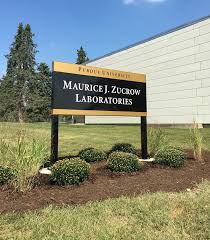
Purdue University’s Maurice J. Zucrow Laboratories is the largest academic propulsion lab in the world. Li Qiao is an associate professor of aeronautics and astronautics in Purdue’s College of Engineering. His team is working on a new solid propellant based on graphene foam for use in rocket engines. Their goal was to increase the burn rate of the solid fuel. Li said, “Our propulsion and physics researchers came together to focus on a material that has not previously been used in rocket propulsion, and it is demonstrating strong results.”
Li’s team is researching methods of creating and using composites that consist of conductive highly porous graphene foams loaded with solid fuels. The foams enhance the burn rate for the solid fuels that have been loaded into the foam. The team had a goal of maximizing the catalytic effect of metal oxides additives that are commonly used in solid propellants in order to facilitate decomposition. Their foam structures are thermally stable at high temperatures and can be reused by reloading solid fuel into the foam to replace the fuel that has burned.
The graphene foam works very well for solid propellants because it is extremely lightweight and highly porous. This mean that it has many holes in which engineers can load fuels to ignite a rocket launch. The foam has a 3D interconnected structure which allows for a more efficient thermal transport pathway. This allows heat to spread quickly to ignite the propellant loaded into the foam.
Li Qiao said that “Our patented technology provides higher performance that is especially important when looking at areas such as hypersonics. Our tests showed a burn rate enhancement of nine times the normal, using functionalized graphene foam structures.” Li Qiao says that the Purdue graphene foam research has applications for energy conversion devices and missile defense systems. There also other areas where tailoring nanomaterials for specific purposes can very useful.
Li Qiao and his team are working with the Purdue Research Foundation Office of Technological Commercialization in order to patent the new technologies they have developed. They are currently seeking partners to license the new technology. The OTC “operates one of the most comprehensive technology transfer programs among leading research universities in the U.S. Services provided by this office support the economic development initiatives of Purdue University and benefit the university’s academic activities.” -
PepsiCo Backs Down From Announced Billboard In The Sky
There are many practical reasons to launch satellites including Earth sensing, astronomy, preparing for deep space missions, carrying out low gravity research on chemistry and biology, etc. There are also strategic reasons such as control, command and communication of men and equipment on the ground during war as well as placing weapons in orbit for use in conflict. Then there are some reasons that do not appear to be quite so useful.
It was first reported back in January of 2019 that StartRocket, a Russian aerospace company, announced that it intends to launch a bunch of cubesats into Earth orbit that can act as an “orbital billboard.” The billboard would be used to project huge advertisements into the night sky, sort of like artificial constellations. The cubesats would unfurl pieces of highly reflective Mylar which would be manipulated to reflect light to the Earth in early mornings and/or evenings. Just what the world needs, more public advertising.
StartRocket said a few days ago that PepsiCo will be its first client. Pepsi will use the orbiting billboard to support its new energy drink called Adrenaline Rush through a “campaign against stereotypes and unjustified prejudices against gamers.”
Olga Mangova is a spokesperson for Russian PepsiCo. She confirmed that the stories about PepsiCo contracting StartRocket are true. She sent an email which said, “We believe in StartRocket potential. Orbital billboards are the revolution on the market of communications. That’s why on behalf of Adrenaline Rush — PepsiCo Russia energy non-alcoholic drink, which is brand innovator, and supports everything new, and non-standard — we agreed on this partnership.”
Vlad Sitnikov is the project leader for the PepsiCo campaign. He said “We are ruled by brands and events such as the Super Bowl, Coca Cola, Brexit, the Olympics, Mercedes, FIFA, Supreme and the Mexican wall. The economy is the blood system of society. Entertainment and advertising are at its heart.”
StartRocket recently tested its idea by attaching one of its reflectors to a helium weather balloon that carried it into the stratosphere. The light from the reflector was visible from the ground. StartRocket intends to launch its cubesat into orbit in 2021. It is currently raising funds to pay for the cubesats and launches. A twenty-thousand dollar investment will pay for eight hours of advertising in the night sky.
There were many negative reactions to the announced plans of StartRocket. They consider the idea of orbital advertisements as a form of sky pollution. An astronomer at the University of Michigan said, “Launching art projects like this with no commercial, scientific, or national security value seems unwise.”
Apparently, the backlash to the announcement of the project intimidated PepsiCo. A few days after the PepsiCo project was announced, PepsiCo says that it has no intentions of doing anything more with the concept of orbital advertising that the launch of the balloon to test the idea. A PepsiCo spokesperson made a public statement that “This was a one-time event; we have no further plans to test or commercially use this technology at this time.”
When contacted about this reversal on the part of PepsiCo, StartRocket representatives were confused by the new PepsiCo position. I am relieved that we have escaped being bombarded by ads in the sky for the time being. Unfortunately, it is probably only a matter of time until someone does it. -

Conflict In Orbit – Part 2 of 2 parts
Part 2 of 2 Parts
Beyond concerns about space debris, there are worries expressed by national governments and international regulatory bodies that the current view of space as a neutral and conflict-free zone is being eroded by ASAT tests. This may mark a serious decline in global security.
There are five main international global space treaties that have been in force for up to fifty years.
• Outer Space Treaty – governs the activities of the states in exploration and use of outer space
• Rescue Agreement – relates to the rescue and return of astronauts, and return of launched objects
• Liability Convention – governs damage caused by space objects
• Registration Convention – relates to registration of objects in space
• Moon Agreement – governs the activities of states on the Moon and other celestial bodies.
When these treaties were written and ratified, there were only a few space faring nations and the technology was primitive by today’s standards. Many import issues were left unresolved by these treaties. The deployment of weapons of mass destruction in orbit by any of the signatories is prohibited. However, powerful conventional weapons such as the non-nuclear ballistic missile used in the Indian test are not prohibited.
The treaties says that space shall only be used for “peaceful purposes.” Unfortunately, whenever lawyers are involved, you have to be very careful about the exact meaning of words in laws and treaties. After the successful ASAT missile test, India released a statement that said that “we have always maintained that space must be used only for peaceful purposes.” The fact that India could conduct such a test and then make such a claim means that new treaties must be developed that more fully define terms such as “peaceful purposes.”
Work on new space treaties is being carried out in a number of places. At McGill University in Canada, the MILAMOS project is trying to develop a set of fundamental rules of the military use of outer space. The Woomera Manual is a project of the Adelaide Law School in Australia. As important as these projects are, they can only result in “soft laws” which are not binding on any of the space faring nations. The U.N. should be more involved in working on space security issues. Both the U.N. Disarmament Commission and the U.N. Committee on the Peaceful Uses of Outer Space should be pressured to devote more resources to the discussion of the use of weapons in orbit.
To be honest, I am afraid that there is just no way that powerful weapons will not find their way to Earth orbit if they are not already there. There is no global inspection of payloads that are launched into Earth orbit. There are powerful space faring nations that fear each other. I am certain that the international space treaties do not intimidate them and that they would consider it a dereliction of duty not to send secret caches of weapons to orbit “just in case.”
There is no satisfactory solution to this problem. There will be weapons in orbit and they will be used someday. All we can do is work on diplomacy here on Earth to try to prevent a war that spreads to the heavens. -

Conflict In Orbit – Part 1 of 2 Parts
Part 1 of 2 Parts
In my last couple of posts, I talked about the dangers of attacks on U.S. military satellites and how it could hamper our ability to detected missiles launches from enemies. While I was working on these posts, there were news stories about India’s experiment with an antisatellite missile that they used to shoot down one of their own satellites.
The Indian space program is not as big, sophisticated or as well funded as the space programs of some of the big industrial nations such as the U.S., Russia, China, and the European union. Nonetheless, they have done quite well with their limited resources and have been launching their own rockets and satellites for years now.
On March 27 of this year, India reported that it had carried out an antisatellite missile test that they called “Mission Shakti”. With this successful test, India becomes the fourth nation to demonstrate the capability to use a missile to destroy an orbiting satellite. There was concern among space faring nations that, as a result of the test, over four hundred new pieces of space debris were generated and that some of this debris might threaten the International Space Station.
The type of attack utilized by India to destroy one of its own satellites is called a “kinetic kill” or “hit to kill” attack. The Indian ASAT missile did not have any explosives aboard. The orbiting satellite was destroyed when the ASAT missile crashed into it. This is only one of several ways that an ASAT missile can destroy a satellite in orbit. China used this same technique when it carried out a successful ASAT missile test in 2007, destroying one of their old weather satellites.
Replying to complaints about the space debris generated by their test, India argued that it had conducted the test in the lower atmosphere where the debris would pose less risk because it would burn up. Critics of the test say that India did not properly account for the creation of pieces of debris that were smaller than two inches in diameter and less likely to burn up. Space debris can collide with other space debris and break up to form more even pieces. Space debris can travel at up to six miles per second in the lower atmosphere and even a very small piece could cause problems for operational satellites.
There are almost two thousand operational satellites in orbit around the Earth today. They provide a variety of services to the world including aid to navigation, global communication, weather forecasting, resource tracking, climate change analysis, disaster relief and many others. While these peaceful uses of Earth orbit are of great benefit, satellites can also be used for military purposes such as employing the global civilian GPS systems for targeting missiles. Satellites launched for strictly military purposes include command, control and communications for military operations as well as early warning systems for enemy missile launches. The military uses of satellites make them prime targets in case of a conflict breaks out between space-faring nations.
Please read Part 2 -

U.S. Military Satellites Are Vulnerable To Attack – Part 2 of 2 Parts
Part 2 of 2 Parts
Recently the Air Force’s National Air and Space Intelligence Center and the Office of the Secretary Defense’s 2019 Missile Defense Review issued a report that concluded the same thing as a recent Defense Intelligence Agency which said “China [as well as Russia] is developing sophisticated on-orbit capabilities, such as satellite inspection and repair, at least some of which could also function as a weapon.”
These recent reports as well as other earlier reports suggest that there are four ways that adversary counterspace capabilities could be mitigated. Unfortunately, even if all four of these suggested actions were implemented, they would not necessarily protect our constellations of SBIRSs and AEHFs during the 2020s.
Diplomacy is the first line of defense. Hostile foreign nations are unlikely to be swayed by diplomatic approaches given the increasingly contentious international environment we currently find ourselves in.
Dispersion of space assets would be a way to reduce their vulnerability. Unfortunately, even an accelerated schedule of launch and deployment would leave vulnerabilities in place for much of the 2020s.
Rapid space reconstitution capabilities could replace damaged or destroyed military satellites but would be far too expensive and/or slow to quickly restore lost capabilities.
Suppression of adversarial counterspace capabilities would be effective but should only be used as a last resort. The Mitchell/MITRE report said that “the DoD should formulate operational concepts to attack adversary counterspace assets such as launch facilities, space command and control nodes, ground-based anti-satellite laser facilities, and other related infrastructure.”
Some analysts think that we should develop “bodyguard” satellites and send them up to rendezvous with and protect important U.S. satellites such as the SBIRSs and AEHFs. The proponents of these bodyguard satellites suggest that they should have the same capabilities as the “peaceful” maintenance satellites operated by the U.S. and possible enemies such as Russian and China. In addition to these bodyguard satellites there is a general consensus that the U.S. should continue to develop defensive weapons that could be carried by future versions of the SBIRSs and AEHFs. The development of such weaponry should be sensitive to the development of ASAT weapons by our potential enemies. It would not be a good idea to trigger another arms race in orbit.
The bodyguard satellites would be able to block, disable or destroy an enemy ASAT as well as maintenance satellites if they were attacking U.S. orbital assets. The bodyguards would not even have to destroy the attacking enemy satelliteweapons. They could just render them inoperative by damaging antenna, engines, etc. This would reduce the amount of debris in orbit which would increase if the attacking weapons were blown up.
In addition to directly engaging ASAT weapons, the bodyguards could protect satellites from ASAT attacks by releasing decoys in the path of the ASAT missiles, jamming their command, control and communication links or blinding their sensors.
If there is a delay in the deployment of the next generation SBIRSs and AEHFs or if the new generation does not perform to expectations or new weapons systems are developed by potential enemies that could pose new threats to the SBIRSs and AEHFs, the U.S. would be well served by the bodyguard satellites providing an extra layer of protection for military satellites. -
U.S. Military Satellites Are Vulnerable To Attack – Part 1 of 2 Parts
Part 1 of 2 Parts
Nuclear deterrence depends on being able to detect the launch of nuclear missiles from an enemy as quickly as possible. Long range radar can provide some warning but the best detection system depends on satellites. The military also expects to rely on satellites for global command, control, and communication to coordinate military activities. Analysts say that these two critical satellite systems are vulnerable in the short term.
A few weeks ago, the Mitchell Institute for Aerospace Studies and the MITRE Corporation distributed a report that said, “when it comes to nuclear modernization, NC3 [nuclear command, control and communications] is the least expensive, yet perhaps the most critical.” Regardless of the number of nuclear warheads possessed by the U.S. as compared to the nuclear arsenals of Russia and China, if our military satellites are destroyed, we would be deaf, dumb and blind. This would not be of any assistance in convincing an enemy that we have a functional system of nuclear deterrence.
The report also says that the, “most disturbing and profound [vulnerability] is the end of space as a sanctuary domain – space is likely to be a battleground, with space assets vulnerable to attack.” A year ago, U.S. Air Force Secretary Heather Wilson visited the Mitched Institute. At that time she commented that the big Space Based Infrared System satellites that provide early warning on missile launches are vulnerable to electronic and kinetic attacks. Air Force Advanced Extremely High Frequency which are critical for military communications in a nuclear-disrupted environment are also vulnerable.
The SBIRS and AEHF satellites constellation consist of only six satellites each. They are big as school buses and very expensive at almost two billion dollars each. New versions of both of these types of satellites are in the planning stages and are scheduled to be launched around 2030. This means that the current constellations of SBIRSs and AEHFs must be protected from kinetic and electronic attacks for the next decade.
In 2007, China successfully tested its ground-based direct-ascent anti-satellite. China also launched a missile to simulate an ASAT flight profile that flew almost to geosynchronous orbit. This is worrying to the U.S. because the U.S. SBIRS and AEHF satellites constellation are in geosynchronous orbit.
Just this week, India made a surprise launch of an ASAT that successfully destroyed an Indian satellite. It was a direct kill kinetic weapon that collided with the target satellite, causing it to disintegrate. Such actions increase the orbital debris field.
In the early 2020s, Russia, China, the U.S. and the E.U. will be launching orbital robots for peaceful missions that include removing space debris from orbit and maintaining satellites. The problem with this is that these maintenance satellites could also be used to rendezvous with a U.S. military satellite and disable or destroy it. So the U.S. must have ways to protect its military satellite constellations from such automated maintenance systems.
Please read Part 2